



20 Ton vs 30 Ton Used Excavator: When Should You Upgrade?
Many buyers ask the same question:
“Is a 20 ton excavator enough, or should I buy a 30 ton machine?”
The answer depends on your jobsite, material, truck loading needs, daily work volume, transport plan, repair ability and budget.
A 30 ton excavator is stronger, but stronger does not always mean better. If your job cannot use the extra capacity every day, the larger machine may only bring extra fuel cost, transport pressure and repair risk.
For many overseas buyers, a good 20 ton used excavator is still the safer business choice. It is common, easier to resell, easier to repair and suitable for many types of work.
But when the material is heavier, trucks are larger, and daily production target is higher, upgrading to a 30 ton used excavator can make sense.
The wrong upgrade can turn extra power into extra cost.
Quick Answer: 20 Ton or 30 Ton?
Choose a 20 ton used excavator for general earthmoving, road work, rental business, dealer resale, farm work, municipal work and normal contractor jobs.
Choose a 30 ton used excavator when you need heavier loading, larger bucket capacity, stronger digging force, bigger truck loading or higher daily production.
If your budget is limited, machine condition should come before machine size. A strong-condition 20 ton machine can be more useful than a weak-condition 30 ton machine.
20 Ton vs 30 Ton Summary Guide
| Buyer Situation | Better Direction |
| General earthmoving, road work, rental or resale | 20 ton |
| Limited budget but need reliable condition | 20 ton |
| Narrow or mixed jobsite | 20 ton |
| Bigger trucks and higher daily loading target | 30 ton |
| Heavier material or quarry-related loading | 30 ton |
| Job can use higher output every day | 30 ton |
| 30 ton condition is unclear | Compare carefully |
| 20 ton is too slow for daily work | Consider 30 ton |
| 30 ton is still too small for production | Consider 35-40 ton or larger |
The simple rule is this: stay with 20 ton when the work is general, flexible and cost-sensitive. Upgrade to 30 ton only when your job, truck size, material, production target and repair ability can support the larger machine.
Page Navigation
- Main difference
- When 20 ton is enough
- When 30 ton makes sense
- Risk of buying too small
- Risk of upgrading too early
- Used machine condition
- Common models
- FAQ
Main Difference Between 20 Ton and 30 Ton Excavators
The main difference is not only weight.
A 30 ton machine usually gives more digging force, more stability, larger bucket capacity and stronger loading ability. It can move more material when the jobsite and trucks are ready for that output.
A 20 ton machine is usually more flexible. It is easier to transport, easier to repair, easier to resell in many markets and more suitable for mixed jobs.
A simple way to think about it:
- 20 ton= general work, easier cost control, wider market demand
- 30 ton= heavier work, higher output, higher cost and stronger support requirement
Both sizes can be good choices. The real question is which one fits your daily work and buying budget.
When a 20 Ton Excavator Is Enough
A 20 ton used excavator is enough for many buyers.
It is one of the most practical sizes for overseas markets because it can handle many jobs without becoming too expensive to transport, fuel or repair.
A 20 ton excavator often fits:
- general earthmoving
- road construction
- municipal work
- farm work
- rental fleets
- dealer resale
- normal contractor jobs
- small to medium truck loading
For dealers and traders, the 20 ton class is often easier to move because many end users understand this size.
For rental companies, 20 ton machines can fit more customer groups. For contractors, this size is useful when the work is mixed and not extremely heavy.
When the buyer is not sure about long-term demand, 20 ton usually gives more flexibility than 30 ton.
For buyers with limited budget, a 20 ton machine in good condition is usually a better choice than a cheaper 30 ton machine with unclear condition.
When a 30 Ton Excavator Makes More Sense
Staying with 20 ton is not always the right answer.
If the machine is always overloaded, works too slowly, cannot load the required trucks or cannot keep up with daily production, the lower purchase cost may become false economy.
A 30 ton used excavator makes more sense when the job is clearly heavier.
This size is often chosen for:
- heavier loading
- larger earthmoving
- stone yard work
- bigger contractor jobs
- light quarry-related work
- larger truck loading
- higher daily production
A buyer should upgrade to 30 ton only when several conditions are clear: heavier material, larger truck loading, stable daily work volume, enough jobsite space and repair ability for heavier machines.
A 30 ton machine should make money through higher production. If it cannot do that, it is only a heavier cost.
Risk of Choosing a Machine Too Small
Choosing 20 ton only to save money can become a problem if the job is clearly heavier than the machine can handle.
A 20 ton excavator may be too small when:
- truck loading is too slow
- bucket capacity is not enough
- material is too hard or heavy
- daily production cannot reach the target
- the machine is pushed too hard every day
- the jobsite needs stronger stability
A smaller machine may have a lower purchase price, but if it works too slowly every day, the buyer may lose time, fuel and productivity.
If the job already needs heavier loading and larger truck support, staying with 20 ton may only delay the real upgrade.
Risk of Upgrading to 30 Ton Too Early
Upgrading to 30 ton too early can also create problems.
A 30 ton excavator may be too large when:
- the job is mostly normal earthmoving
- the jobsite is narrow or mixed
- truck size does not need a larger bucket
- daily production is not high enough
- transport cost pressure is high
- local repair ability for larger machines is weak
- the buyer only wants a bigger machine because the price looks close
A 30 ton machine should make money through higher production. If the job cannot use the extra capacity every day, the larger machine may only bring higher fuel cost, transport cost, repair pressure and undercarriage wear.
Fuel, Transport and Maintenance Cost
A 30 ton excavator usually costs more to run than a 20 ton excavator.
The difference is not only the purchase price. A larger machine may bring:
- higher fuel consumption
- higher local transport cost
- more shipping planning
- heavier undercarriage repair
- more expensive parts
- higher hydraulic repair cost
- stronger mechanic requirement
For overseas buyers, the real cost is not only the machine price in China. The buyer should also consider inland transport, loading arrangement, sea freight direction, local transport after arrival, parts supply and future repair cost.
This does not mean 30 ton machines are bad. It means the buyer needs enough work to justify the cost.
When comparing two machines, do not compare only the price. Compare the full cost after arrival: transport, fuel, repair, parts, undercarriage and resale.
Bucket Size and Loading Efficiency
Many buyers think about upgrading to 30 ton because they want a bigger bucket and faster loading.
That can be correct, but only when the job supports it.
A bigger bucket is only efficient when the material, hydraulic power, truck size and operator rhythm all match.
If the bucket is too large for the material, the machine may look productive but actually work slower and wear faster.
A good loading decision should consider:
- material type
- bucket size
- truck size
- loading height
- jobsite space
- hydraulic condition
- daily production target
If the buyer needs to load larger trucks every day, 30 ton may be a better choice. If the job is normal digging and mixed work, a 20 ton machine may be easier and more practical.
Rental and Resale Considerations
For dealers, traders and rental companies, the best machine is not always the biggest one. It is the machine that local customers understand, request often, repair easily and buy again.
The 20 ton class usually has strong demand because it fits many jobs. It is easier to explain, easier to rent out and easier to resell in many markets.
The 30 ton class can also be attractive, especially for buyers who serve larger contractors, stone yards, quarry-related jobs or heavier earthmoving customers.
Choose 20 ton when your customers mostly do general work, rental, municipal work, roads, farms or normal contracting.
Choose 30 ton when your customers often ask for heavier loading, larger buckets, quarry-related work or bigger contractor machines.
Used Machine Condition Can Change the Decision
Used machine condition can change the whole decision.
A 30 ton machine is larger, but that does not make it a better deal if the condition is weak.
Do not use size to cover condition problems.
If the 30 ton machine has weak hydraulics, heavy undercarriage wear, engine smoke, oil leakage or unclear videos, the extra size may only bring extra repair cost.
A strong-condition 20 ton machine can be more useful than a weak-condition 30 ton machine.
Before upgrading, check:
- engine start and smoke
- hydraulic response
- boom and arm condition
- bucket pins and looseness
- undercarriage wear
- swing movement
- walking performance
- current working videos
- machine plate and basic details
If the budget is limited, do not chase size first. Chase condition first.
The right choice is not only 20 ton or 30 ton. It is the right size, right condition, right brand support and right budget.
When 20 Ton or 30 Ton May Not Be the Right Size
Sometimes the buyer should not stay only between 20 ton and 30 ton.
If the work is narrow, light, farm-based, small municipal work or easy transport is the main concern, a 6-8 ton or 12-15 ton used excavator may be more practical than a 20 ton machine.
If the work is long-term quarry, mining, continuous breaking, very large truck loading or high daily production, a 30 ton machine may still be too small. In that case, buyers may need to consider 35 ton, 40 ton or larger excavators depending on the project.
The right size is not the largest size. It is the size that matches the job, budget, transport plan, repair ability and local resale market.
Common 20 Ton and 30 Ton Used Excavator Models
The following models are common reference models in used excavator export inquiries, but actual availability should be confirmed by current stock and sourcing support.
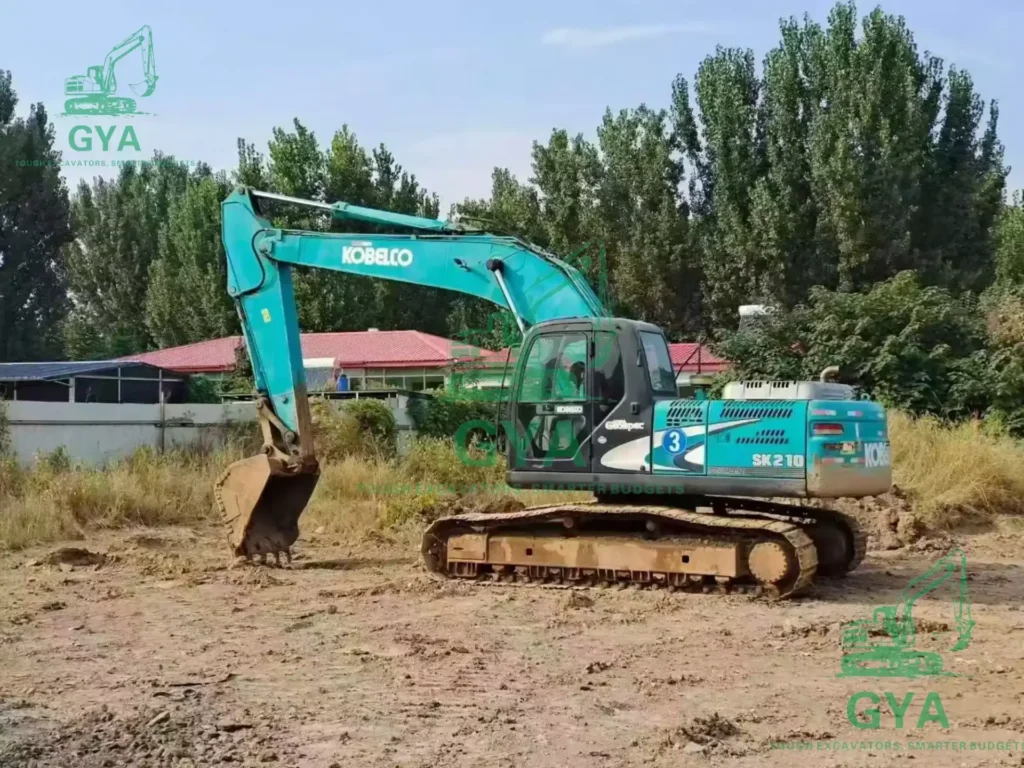
Common 20 ton and 20-ton-plus class used excavators may include CAT 320 series, Komatsu PC200 series, Hitachi ZX200 series, Hyundai 220 series, Doosan DX225 series and Kobelco SK200 / SK210 series, depending on market naming, current stock and machine condition.
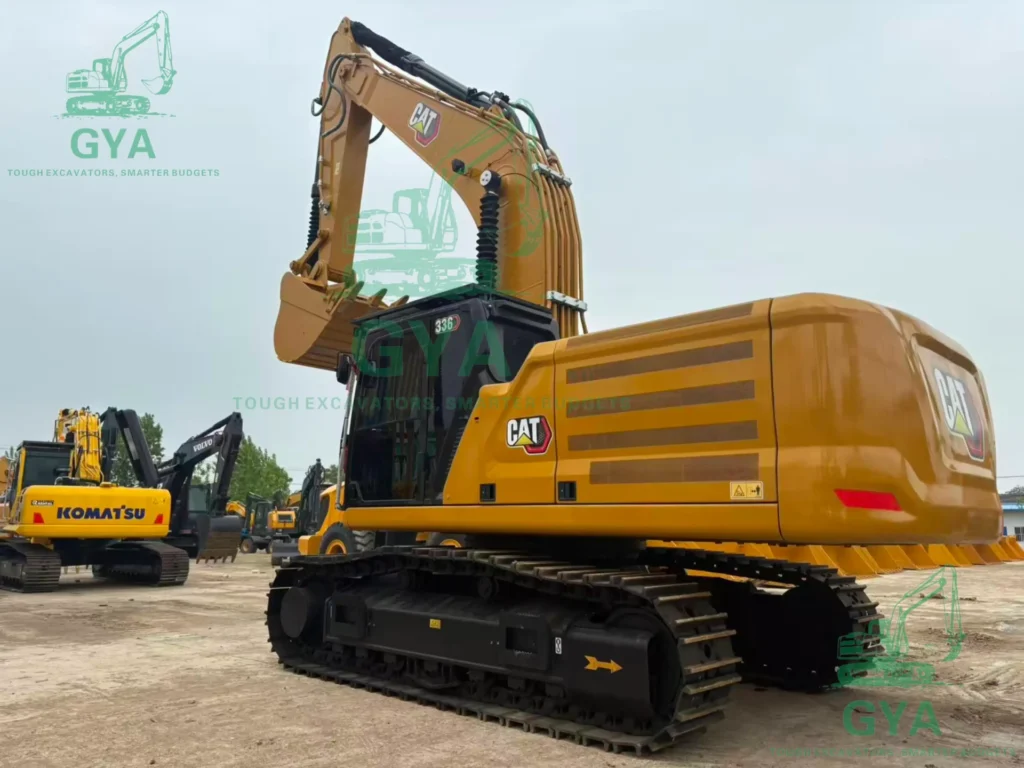
Common 30 ton and 30-ton-plus class used excavators may include CAT 330 / 336 series, Komatsu PC300 / PC360 series, Hitachi ZX330 / ZX350 series, Hyundai 300 / 305 series, Volvo EC290 / EC300 series and Doosan DX300 series, depending on current availability and buyer market.
Do not choose a machine only by model name. Check the real machine condition, engine, hydraulics, undercarriage, videos, repair ability and local parts support before confirming.
Final Decision Checklist
Use this checklist before choosing between 20 ton and 30 ton.
Choose 20 ton if:
- the work is mostly general earthmoving
- rental or fast resale is important
- the jobsite is narrow or mixed
- lower fuel and transport pressure matter
- your budget is limited but you need better condition
Choose 30 ton if:
- you need heavier loading every day
- you load larger trucks regularly
- the material is heavy or harder to dig
- the jobsite has enough working space
- local repair support can handle larger machines
- the 30 ton machine condition is strong and clear
Consider another size if:
- 20 ton is too large for narrow or light work
- 30 ton is still too small for the production target
- transport, repair or resale does not support either choice
Ask Which Size Fits Your Job
You can send your jobsite, material type, truck size, daily working target, budget range, preferred brand and destination port. We can help you compare whether a 20 ton or 30 ton used excavator fits your work better.
To compare suitable options, please send:
- main work type
- material type
- truck size
- daily working target
- budget range
- preferred brand or model
- destination country and port
- whether you need current working video, repainting or attachments
Machine availability, year, hours, paint condition, attachments and configuration should be confirmed by current photos, videos and machine details.
FAQ
Is a 20 ton excavator enough for my job?
A 20 ton excavator is enough for many general earthmoving, road work, municipal, rental, dealer resale and normal contractor jobs. If your work is heavier, needs larger bucket capacity or requires faster truck loading, you may need to compare 30 ton options.
When should I choose a 30 ton used excavator?
Choose a 30 ton used excavator when your job needs heavier loading, larger earthmoving capacity, larger bucket size, bigger truck loading or higher daily production. Also make sure your transport, budget and repair ability can support the larger machine.
Should I buy a good 20 ton machine or a cheaper 30 ton machine?
If your budget is limited, a good-condition 20 ton machine is often safer than a cheap 30 ton machine with weak hydraulics, heavy undercarriage wear or unclear videos.
Is a 30 ton excavator always better than a 20 ton excavator?
No. A 30 ton machine is stronger, but it is not always better. If your job does not use the extra capacity every day, the larger machine may only increase fuel, transport and repair cost.
Which size is better for rental business?
For many rental companies, 20 ton excavators are easier to rent out because they fit more types of work and more customer groups. A 30 ton machine can be good if your local rental market has demand for heavier loading or quarry-related jobs.
Can you help me choose between 20 ton and 30 ton?
Yes. Send your jobsite, material, truck size, daily work, budget, destination port and preferred brand. We can help compare whether a 20 ton or 30 ton used excavator fits your work better.