



Written and reviewed by KAN, Owner of Anhui Gangya Construction Machinery Sales Co., Ltd.
Experience basis: Based on real communication with overseas used excavator buyers, including initial photo screening, detailed photo requests, working video coordination and on-site verification cases.
Last reviewed: July 2026
Reading Navigation
- Why Photo Screening Comes Before Working Video
- What Photos Should Buyers Request First?
- Check Structure, Boom, Arm and Bucket Condition
- What Engine and Hydraulic Photos Can and Cannot Show
- How to Review Undercarriage Photos
- Check Machine Identity and Attachments
- Photos vs Working Video: Different Evidence Has Different Value
- When a Machine Should Move to Working Video
- Final Used Excavator Photo Screening Checklist
Quick Answer: What Can Buyers Learn From Used Excavator Photos?
Used excavator photos are useful for screening visible structure, leaks, external wear, machine identity and undercarriage condition. They can help buyers decide which machines deserve deeper verification, but they cannot confirm engine performance under load, hot hydraulic response or actual operating performance. A clean-looking machine may still require further mechanical checks. Photos should be used to select candidates, followed by working video, operating sound, live communication or physical inspection when necessary.
Current Photos
Main purpose: Screen visible condition and select candidates.
Cannot replace: Evidence of actual operation.
Working Video
Main purpose: Review operation, sound and machine response.
Cannot replace: Physical inspection.
On-Site Inspection
Main purpose: Confirm physical condition in more detail.
A clean-looking used excavator does not automatically mean a strong machine. Appearance and mechanical condition are two different things.
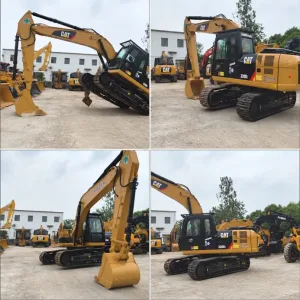
1. Why Photo Screening Comes Before Working Video
Many overseas buyers receive photos of several excavators from different suppliers.
A common mistake is judging mainly by appearance:
“This machine looks newer, so it must be better.”
That conclusion may be wrong.
A used excavator may have:
- Original paint
- Partial paint repair
- Full repainting
- Replaced parts
- Repaired areas
- Different levels of preparation before export
Some buyers prefer original paint because they want to see more of the machine’s previous condition. Other buyers prefer a repainted machine because appearance is important for resale or final delivery.
Neither preference is automatically right or wrong.
The important point is that paint condition should not be confused with mechanical condition.
The first goal is not to choose the best-looking machine.
The first goal is to reduce unsuitable candidates and decide which machines deserve more evidence.
In real communication, experienced dealers often ask directly for specific details. First-time import buyers may need more explanation about which photos matter and what should be checked next.
When a buyer first asks about a machine, I normally provide key photos first.
If the buyer shows serious interest, I provide more detailed photos and arrange the next verification step.
Sending too many photos before understanding the buyer’s real interest does not always improve the decision. It can make the information harder to review.
“I do not use photos to approve a machine. I use photos to decide which machines deserve deeper inspection.” — KAN
For buyers who are still building a complete remote-purchasing process, see:
How to Buy a Used Excavator from China Safely
2. What Photos Should Buyers Request First?
More photos do not always mean better information.
The important question is whether the photos cover the areas that affect the next buying decision.
In many cases, around 9–10 useful photos are enough for the first screening stage.
| Photo Area | What Buyers Can Review |
| Front-left and front-right 45° views | Overall appearance and completeness |
| Left and right sides | Compare body, structure and undercarriage |
| Rear view | Counterweight and visible damage |
| Cab interior | Usage signs and operator area |
| Dashboard and hour meter | Displayed hours and warning information |
| Machine plate | Basic model and identity information |
| Engine area | Visible leaks and external condition |
| Hydraulic area | Visible oil, hoses and external damage |
If the machine remains a serious candidate, request more detailed photos of:
- Boom and arm
- Bucket condition
- Pin and connection areas
- Cylinder rods
- Hydraulic pump
- Main control valve
- Left and right undercarriage
- Track chains and shoes
- Rollers and sprockets
- Attachments and hydraulic piping
The first photo set should help answer one question:
“Should this machine move to the next verification stage?”
It does not need to become a complete inspection report.
3. Check Structure, Boom, Arm and Bucket Condition
After a machine passes the first photo screening, visible structural areas should receive more attention.
Boom and Arm
Photos can show: Cracks, welding or deformation.
Check next: Close-up photos and working video.
Bucket
Photos can show: Wear and visible damage.
Check next: Detailed photos.
Pin Areas
Photos can show: Visible gaps and wear signs.
Check next: Operating movement.
Cylinder Rods
Photos can show: Oil marks, rust or scratches.
Check next: Working condition.
Photos are useful for identifying visible concerns such as:
- Obvious cracks
- Large welding areas
- Reinforcement work
- Structural deformation
- Damaged cylinder rods
- Heavy external wear
However, photos cannot confirm the complete condition of a repaired structure.
A repaired area may require:
- Clear close-up photos
- An explanation from the supplier
- Working video
- Physical inspection when the risk is important
A visible repair does not automatically mean that the machine must be rejected.
The buyer should understand:
- Where the repair is
- How large it is
- Whether nearby areas are affected
- Whether the condition matches the intended work
My own screening standard is more cautious when obvious cracks appear on major structural parts.
“If I see an obvious crack on the boom, arm or X-frame, the machine normally moves lower on my priority list. Unless the buyer clearly understands the repair history and accepts the condition, I usually prefer to continue checking other machines first.” — KAN
This is different from rejecting every repaired machine.
The purpose is to control risk before spending more time on deeper verification.
4. What Engine and Hydraulic Photos Can and Cannot Show
Many buyers pay close attention to engine, hydraulic pump and main control valve photos.
This is reasonable.
However, external appearance is not the same as mechanical performance.
A machine may be cleaned or prepared before export. The engine compartment and hydraulic area may look dry and clean, but that does not prove the remaining internal condition.
Engine
Photos can show: Visible oil, hose condition, missing parts and external cleanliness.
Photos cannot confirm: Internal wear, performance under load or remaining service life.
Hydraulic Pump
Photos can show: External leakage, hose condition and visible damage.
Photos cannot confirm: Hydraulic pressure, internal efficiency or hot-machine response.
Main Control Valve
Photos can show: Oil traces and external condition.
Photos cannot confirm: Internal wear or operating response.
A clean engine compartment does not prove:
- Easy starting
- Stable operation
- Normal exhaust
- Strong performance under load
A clean hydraulic pump does not prove:
- Correct hydraulic pressure
- Fast response after warming up
- Good internal efficiency
- Strong remaining service life
The same principle applies to the main control valve.
KAN Experience Insight
“Many buyers choose a used excavator because the photos look excellent. Later they realize that appearance preparation and mechanical condition are two different things. A clean engine, hydraulic pump or valve area only shows external condition. The remaining performance must be confirmed through working video, operating sound and machine response.” — KAN
Oil around the engine or hydraulic area also needs proper interpretation.
Heavy oil does not automatically prove a serious failure, but it should not be ignored.
“When I see heavy oil around the engine, hydraulic pump or main control valve, I normally request closer photos first and then confirm the area during the working video. A visible oil mark needs explanation, not an automatic conclusion.” — KAN
This keeps the judgment practical.
Do not approve a machine because it looks clean.
Do not reject a machine from one unclear oil mark.
Request the next useful evidence.
5. How to Review Undercarriage Photos
The undercarriage is one of the most important areas in used excavator photo screening.
Buyers should avoid checking only one side.
A clear left-side photo does not confirm the condition of the right side.
Request photos showing:
- Left track chain
- Right track chain
- Track shoes
- Rollers
- Sprockets
- Guide wheels
- Both complete undercarriage sides
Photos can help identify:
- Obvious wear
- Broken track shoes
- Missing parts
- Different wear levels between both sides
- Visible roller or sprocket problems
However, photos cannot fully confirm:
- Internal pin and bushing wear
- Travel-motor condition
- Actual travel performance
- Exact remaining service life
The purpose is not to calculate undercarriage life from photos.
The purpose is to understand whether the visible condition matches the buyer’s budget and whether more evidence is needed.
“When the undercarriage already looks heavily worn in photos, I normally request a travel video before treating the machine as a strong candidate.” — KAN
A worn undercarriage may still be acceptable for some buyers if the price and planned use match.
The important point is transparency and correct cost judgment.
6. Check Machine Identity and Attachments
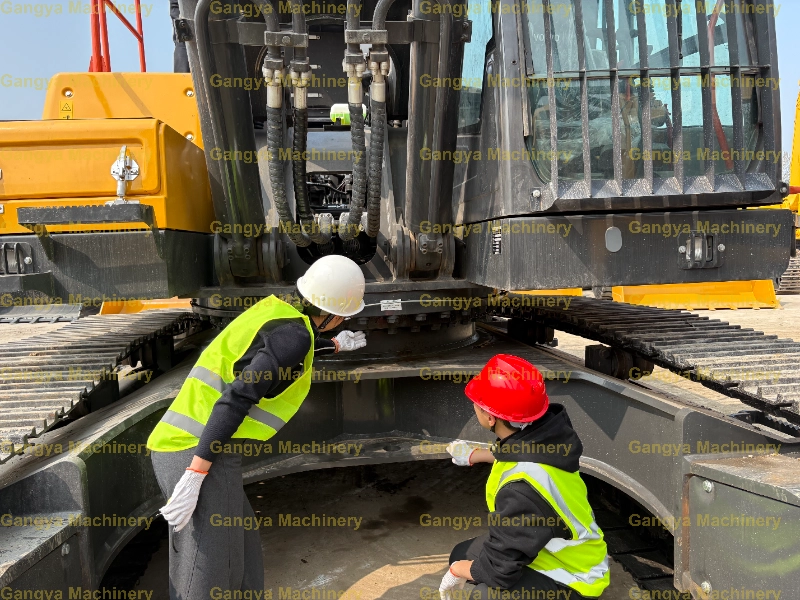
After reviewing visible condition, buyers should confirm that the photos refer to the actual machine being offered.
Current photos should show the actual machine being offered, not merely another machine of the same model.
Buyers should compare:
- Machine plate
- Engine information
- Current overall photos
- Visible configuration
- Hour meter
- Later working video
The evidence should consistently refer to the same machine.
The machine plate is the starting point for identity confirmation, but it does not prove the machine’s current mechanical condition.
The displayed hour meter also has limits.
It shows the number currently displayed on the machine, but it does not prove the complete operating history.
For more detailed identity verification, read:
Machine Plate and Engine Plate: What Used Excavator Buyers Should Confirm
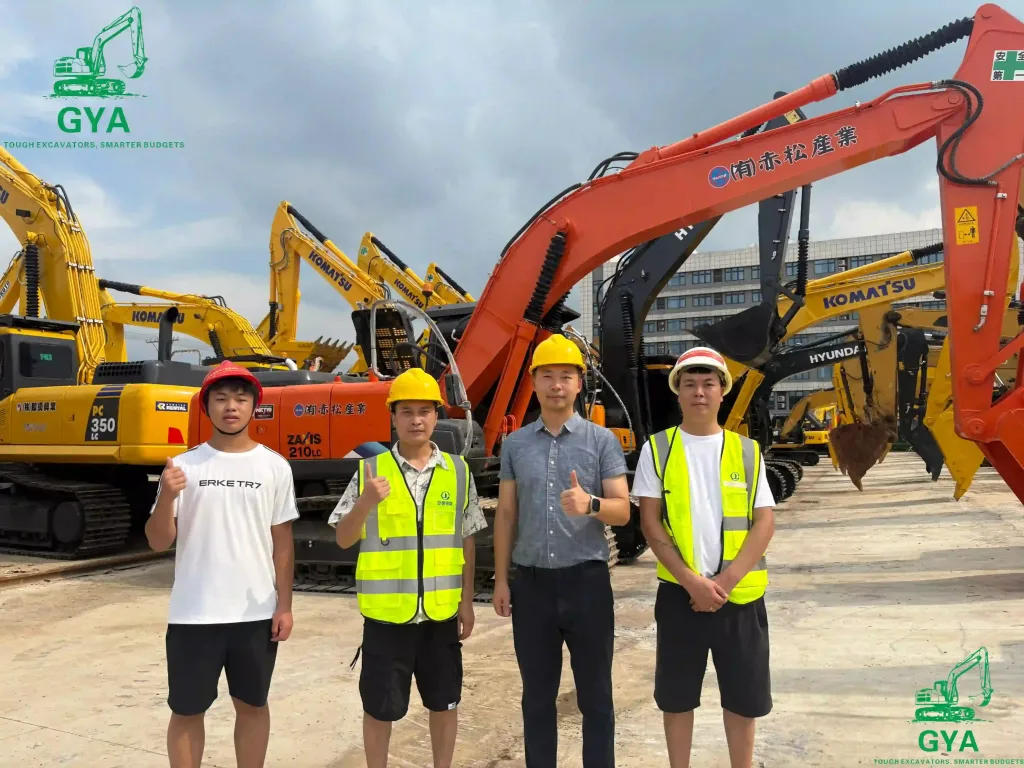
Check Attachments Carefully
Attachments can affect both quotation and practical value.
Common attachments include:
- Standard bucket
- Large bucket
- Narrow bucket
- Hydraulic breaker
- Breaker piping
- Quick coupler
- Log grapple
Before comparing prices, confirm:
- Is the attachment included?
- Is it new or used?
- Is it installed or supplied separately?
- Does it match the excavator?
- Are hydraulic piping and connections included?
- Is the attachment shown in the current photos?
A machine with more attachments is not automatically a better deal.
Attachment condition, brand, compatibility and actual usability also matter.
7. Photos vs Working Video: Different Evidence Has Different Value
One of the biggest mistakes in remote purchasing is expecting photos to answer every question.
Different evidence has different roles.
What Photos Can Help Confirm
- Whether the images appear to show the offered machine — basic confirmation
- Whether the exterior condition is acceptable
- Visible damage, attachment condition and machine identity
- Visible leaks or oil marks in some areas
What Working Video Adds
- Stronger confirmation that the evidence refers to the offered machine
- Better observation of visible leaks during operation
- A better indication of engine operation and hydraulic response
- A better indication of travel movement and operating smoothness
- Operating sound and real-time machine response
A professional buyer should not ask only:
“Are these photos enough?”
A better question is:
“What evidence should I request next?”
Photos help select candidates.
Working videos help review operation.
Live video calls or physical inspections provide another verification layer when necessary.
This article does not explain how to diagnose every engine, hydraulic or travel condition from video.
Those checks belong in a dedicated working-video or technical-inspection guide.
8. When a Machine Should Move to Working Video
A machine is usually worth further checking when:
- Important photos are available
- Machine identity is reasonably clear
- No obvious major structural problem appears
- Visible condition matches the buyer’s requirements
- Repainting, repairs or replacement work can be explained
The next evidence may include:
- Cold-start video
- Working video
- Travel video
- Live video call
Request more photos before video when:
- An important area is missing
- Oil marks are unclear
- The undercarriage is only shown from one side
- The machine plate is unreadable
- A repaired area needs closer detail
- Attachment information is incomplete
Lower the machine’s priority when:
- Only attractive exterior photos are provided
- Important areas are repeatedly avoided
- Machine identity remains unclear
- Major structural damage is visible
- The visible condition clearly does not match the buyer’s requirements
The purpose is not to reject every imperfect machine.
It is to use time efficiently and focus on the most suitable candidates.
Real Example: Hyundai 220-9S Buyer Verification Process
A buyer from Sudan was interested in a Hyundai 220-9S.
At the beginning, I provided around nine basic photos of the machine.
The buyer first reviewed:
- Overall appearance
- Basic visible condition
- Main machine areas
After he showed stronger interest, I provided more detailed photos.
When the price was close to agreement, the buyer arranged for his contact in China to visit the machine.
During the inspection:
- The machine was checked on-site
- The buyer joined through a live video call
- More condition details were confirmed in real time
The actual machine seen during the on-site inspection matched the condition shown in the earlier photos.
The process was:
Photos → More detailed evidence → Live video communication → Physical inspection
The buyer did not rely on photos alone.
The photos helped him decide whether the Hyundai 220-9S was worth verifying further.
They did not replace working evidence or physical inspection.
This is the correct role of photos in remote used-equipment purchasing.
9. Final Used Excavator Photo Screening Checklist
Before moving from photos to working video, confirm the following:
| Check Point | Why It Matters |
| Front, rear and side views | Understand overall condition |
| Both 45° views | Avoid judging only one good angle |
| Cab and dashboard | Review usage signs and displayed information |
| Hour meter | Confirm displayed hours |
| Machine plate | Begin identity verification |
| Engine area | Review visible external condition |
| Hydraulic pump | Check visible oil and hoses |
| Main control valve | Review visible external condition |
| Boom and arm | Check cracks, welding and repair areas |
| Bucket and pins | Review visible wear |
| Cylinder rods | Check oil, rust and scratches |
| Both undercarriage sides | Compare visible wear |
| Attachments | Confirm actual configuration |
| Repainting and repairs | Understand previous work and current presentation |
| Current-machine consistency | Confirm photos, plate and video refer to the same machine |
Frequently Asked Questions
Can photos prove that a used excavator is in good condition?
No.
Photos can show visible condition and obvious risks, but they cannot confirm engine performance, hydraulic response, internal wear or actual operating performance.
How many photos should buyers request first?
Around 9–10 useful photos are often enough for initial screening.
The important point is coverage, not the total number.
Can a clean engine photo prove that the engine is good?
No.
A clean engine compartment only shows external presentation. Starting condition, operating sound and performance still require working evidence.
Should buyers reject every repainted or repaired excavator?
No.
The buyer should first understand what was repaired, why it was repaired and whether the current condition matches the intended work.
What should buyers request after reviewing photos?
The next step may include:
- Cold-start video
- Working video
- Travel video
- Live video call
- Physical inspection when necessary
Ask for Current Photos and Working Video
If you are checking one of our available used excavators, ask us for current photos of the actual machine and the working video needed for the next verification step.
If you are comparing several used excavators and are unsure which machine deserves further checking, you can also share the current photos you received.
We can help identify:
- Which visible areas are already clear
- Which areas need more photos
- Which condition claims require working evidence
- Which machine may deserve the next video check
The purpose is not to approve a used excavator from pictures alone.
The purpose is to identify what evidence should be requested next before making a purchase decision.
A more reliable buying decision comes from consistent evidence: current photos, working video, machine information, live verification and inspection when necessary.