


| Written and reviewed by: KAN, Owner of Anhui Gangya Machinery Experience basis: Practical experience sourcing, inspecting, operating and exporting used excavators from China Last reviewed: July 2026 |
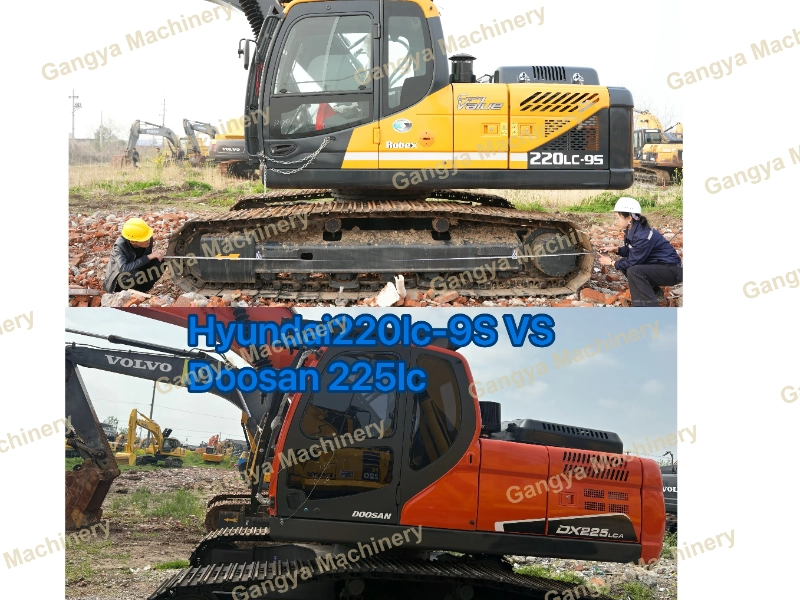
Hyundai R220LC-9S and Doosan DX225LCA are often compared by buyers looking for a practical Korean 22-ton used excavator.
Both can handle general earthmoving, road construction, rental projects and many contractor jobs. This article mainly discusses the commonly seen mechanical direct-injection engine configurations.
In this article, mechanical direct injection refers to the engine fuel system, not the entire excavator. Electrical components and hydraulic control systems should still be inspected on the actual machine.
The buying decision should not be reduced to one question:
Cummins or Doosan engine?
The more useful comparison is:
- What work will the machine do?
- Which engine and machine system can local mechanics support?
- Which model is easier to resell locally?
- Which actual used machine is in better condition?
When both models can complete the job, used-machine condition should come before the engine brand.
Quick Answer: R220LC-9S or DX225LCA?
Choose Hyundai R220LC-9S when:
- the machine will handle rental or mixed projects
- hard digging and higher working loads are common
- firmer digging and travel response are preferred
- Cummins engine support is strong in the local market
- Cummins recognition may help local resale
Choose Doosan DX225LCA when:
- the work is mainly normal earthmoving
- trenching, road construction or municipal projects are common
- smooth combined movement matters
- operator comfort is important
- local Doosan parts and repair support are already mature
When one machine is clearly in better condition, the actual machine should take priority over the general model recommendation.
R220LC-9S vs DX225LCA Summary Guide: Which Direction Fits You?
| Buyer Situation | Recommended Direction |
| Rental, mixed work and changing projects | R220LC-9S – Cummins recognition and firmer response under load may help |
| Normal earthmoving, road work and trenching | DX225LCA – Smoother combined movement may suit long operating hours |
| Hard soil and higher working loads | R220LC-9S – Often feels firmer during digging and travel under load |
| Local Doosan machine population is large | DX225LCA – Existing repair experience and parts support may reduce maintenance pressure |
| One machine is clearly cleaner than the other | Choose the cleaner machine – When both models fit the work, condition should come before brand |
| Model or engine identity is unclear | Do not decide yet – Confirm the plate, engine and actual configuration |
| Long-term mining or continuous heavy work | Consider a larger machine |
How We Built This Comparison
This guide combines official model and engine information with Anhui Gangya Machinery’s practical experience in inspecting, operating, sourcing and exporting used excavators from China.
Working-feel observations are based on used-machine experience, not controlled factory testing. Final decisions should be checked against the machine plate, engine information, current photos, working videos and actual condition of the selected machine.
Reading Navigation
- Model and engine confirmation
- Main working differences
- When to choose R220LC-9S
- When to choose DX225LCA
- Who should avoid each model
- Same-budget decision
- Local repair support and resale
- Used-machine inspection
- When neither model fits
- Final decision checklist
Why Buyers Compare R220LC-9S and DX225LCA
These two models are close in working class and can complete many of the same jobs.
Buyers often compare them because both are practical Korean 22-ton excavators and are commonly available with mechanical direct-injection engine configurations.
The difference becomes clearer when buyers stop comparing only engine names and start asking:
- What work will the machine do every day?
- Which engine do local mechanics understand better?
- Which model has stronger local parts support?
- Which model sells faster after arrival?
- Which actual machine is in better condition?
In our operating and used-machine inspection experience, the comparison becomes more useful when job type, local repair support and current machine condition are considered together.
Confirm the Model and Engine Before Comparing Performance
How R220LC-9S and R225LC-9T Are Described in Export Listings
Buyers searching for R220LC-9S may also be shown R225LC-9T-based machines in the China used-equipment market.
This should be treated as a market-listing and sourcing practice, not proof that every machine has an identical factory configuration.
Exterior decals may sometimes follow the model name commonly recognized in the destination market.
Exterior decals do not change the original machine identity.
The original machine information should remain transparent.
Before comparing price or performance, confirm:
- original machine plate
- serial information
- engine information
- actual bucket configuration
- undercarriage configuration
- current working video
- model description on the quotation
- machine description on export documents
Do not assume that every R220LC-9S and R225LC-9T machine is automatically identical.
DX225LCA Is Not the Same as Every DX225 Version
Buyers often ask only for:
Doosan DX225
That description is not enough.
This article focuses on the commonly seen DX225LCA configuration with the DB58TIS mechanical direct-injection engine.
Other DX225 versions may use different:
- engines
- fuel systems
- control systems
- model suffixes
- market descriptions
Before purchase, confirm:
- full model name
- machine plate
- engine identification
- actual engine configuration
- current photos
- current working video
The full model suffix and actual engine matter more than a shortened listing title.
Main Working Differences: Engine Support, Load Feeling and Hydraulic Control
Engine Platform and Local Support
The R220LC-9S machines discussed here commonly use the Cummins B5.9 mechanical direct-injection engine.
In markets where Cummins B-series engines are widely used, local mechanics may already understand:
- common engine service parts
- mechanical fuel-system repair
- fuel-pump service
- injector service
- general engine maintenance
This may make engine servicing easier and reduce repair downtime.
However, the engine brand alone does not determine the value of the complete excavator.
A Cummins engine label cannot compensate for weak hydraulics, heavy undercarriage wear, engine blow-by or unclear machine identity.
DX225LCA commonly uses the DB58TIS mechanical direct-injection engine.
In markets with a large Doosan machine population, local repair experience and DB58 parts support may already be well established.
The better engine platform is usually the one local mechanics understand and local parts suppliers can support.
Digging and Travel Under Load
In the used machines we have operated and inspected, R220LC-9S often feels firmer during digging and travel under load.
It may feel more capable in:
- hard soil
- higher-load earthmoving
- climbing
- difficult ground
- loaded swing
The operating response is usually more direct and firm.
However, boom lifting may not feel especially fast, particularly at lower engine speed.
Actual working response still depends on:
- engine condition
- hydraulic-pump condition
- hydraulic adjustment
- operating mode
- current machine wear
Combined Movement and Fine Control
DX225LCA often feels smoother during combined operation.
The controls may feel lighter, and boom, arm, bucket and swing movements can connect more naturally.
This can be useful for:
- trenching
- slope finishing
- municipal work
- road construction
- normal earthmoving
- long daily operating hours
Operators who value smooth control may prefer the Doosan working feel.
However, current machine condition can reverse this comparison.
A worn pump, weak engine or poor hydraulic system can make a normally smooth machine slow or inconsistent.
Fuel and Running Cost
Based on our practical experience, DX225LCA may feel more economical in normal earthmoving, but actual fuel use varies too much to judge from the model name alone.
Fuel consumption depends on:
- working load
- bucket size
- engine condition
- hydraulic condition
- operating mode
- operator habits
- jobsite cycle
Do not compare two used excavators by one hourly fuel number unless the machines are tested under comparable conditions.
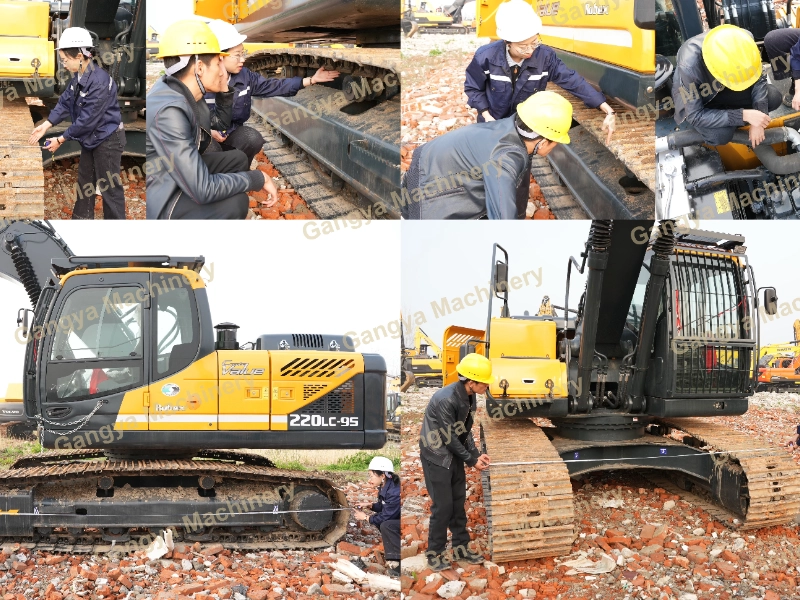
When R220LC-9S Is the Better Choice
R220LC-9S is often the stronger direction when one machine must handle changing projects.
It may fit:
- rental companies
- mixed jobsite work
- hard-soil excavation
- higher-load earthmoving
- larger-volume loading
- occasional light breaker work
- markets with strong Cummins support
For dealers, Cummins engine recognition may also reduce explanation time and improve customer acceptance in some markets.
But the value is not the Cummins name alone.
Before buying, the machine should still show:
- healthy cold starting
- acceptable engine blow-by
- stable working temperature
- good hot hydraulic response
- acceptable undercarriage condition
- clear machine identity
If the machine has serious engine wear, slow hydraulics or heavy structural repair, the engine brand will not remove the repair risk.
When DX225LCA Is the Better Choice
DX225LCA can be a practical choice for buyers focused on normal earthmoving and smooth operation.
It may fit:
- road construction
- municipal projects
- trenching
- grading
- normal-soil excavation
- long daily operating hours
- markets with mature Doosan support
The smoother working feel may reduce operator fatigue and make fine control easier.
This can be valuable when the machine spends most of its time doing normal earthmoving instead of continuous high-load work.
In markets with established Doosan parts suppliers and experienced mechanics, DX225LCA may also be practical to maintain.
Do not assume that every DX225LCA will automatically use less fuel or cost less to maintain.
The current machine condition and the local repair market still determine the real operating cost.
Who Should Avoid R220LC-9S or DX225LCA?
Avoid R220LC-9S when:
- You are choosing it only because of the Cummins name.
- The same budget only reaches a machine with heavy blow-by, slow hydraulics or a worn undercarriage.
- Cummins support is not actually stronger in your local market.
- Your work mainly requires smooth fine control rather than stronger performance under heavier loads.
Avoid DX225LCA when:
- Local mechanics have little experience with the DB58 engine.
- Doosan parts are difficult to source in your market.
- Your resale customers strongly prefer Cummins-powered machines.
- The work is regularly hard and heavily loaded.
- The current machine has serious black smoke, weak load response, uneven travel or heavy structural corrosion.
A model recommendation only works when the actual machine is in acceptable condition.
Same Budget: Cleaner R220LC-9S or Cleaner DX225LCA?
When both models can complete the required work, compare condition first.
Cleaner R220LC-9S vs Average DX225LCA
Choose the cleaner R220LC-9S.
Its advantages may include:
- lower preparation cost
- clearer engine recognition
- easier resale explanation
- lower repair risk
- stronger confidence for mixed projects
Cleaner DX225LCA vs Average R220LC-9S
Choose the cleaner DX225LCA.
Better engine condition, hydraulic response, undercarriage and structure can create more value than a stronger engine brand on paper.
A tired R220LC-9S may require:
- engine repair
- hydraulic work
- undercarriage replacement
- cylinder repair
- structural correction
These costs can quickly remove the advantage of the Cummins name.
A clean DX225LCA can be safer than an average R220LC-9S when both machines can complete the same job.
Condition first. Brand second.
Why Used-Machine Quotations Can Differ
Used R220LC-9S and DX225LCA prices can differ because of:
- year
- displayed hours
- engine condition
- hot hydraulic response
- undercarriage wear
- paint condition
- repair history
- attachments
- preparation level
In some markets, a Cummins-powered machine may carry a resale premium.
That premium should not outweigh:
- weak hydraulics
- serious engine wear
- poor undercarriage condition
- unclear machine identity
Compare condition evidence first, then compare quotations on a like-for-like basis.
Local Repair Support, Parts and Dealer Resale
For dealers, the better machine is not always the one with the stronger specification.
The better machine may be the one that:
- local buyers already know
- local mechanics already repair
- local parts suppliers already support
- sells faster after arrival
- returns working capital sooner
Before buying for resale, ask:
- Which model has a larger local machine population?
- Which engine do local mechanics understand better?
- Which model has faster parts supply?
- Which model do buyers request by name?
- Does a Cummins engine create a real resale premium?
- Which model normally sells faster?
- Which model can return capital sooner?
For dealers, local resale speed and capital turnover can matter more than which brand looks stronger on paper.
Do not use one regional rule for every country.
A market with strong Cummins support may favor R220LC-9S.
A market with a large Doosan machine population may favor DX225LCA.
Local evidence is more useful than a broad brand assumption.
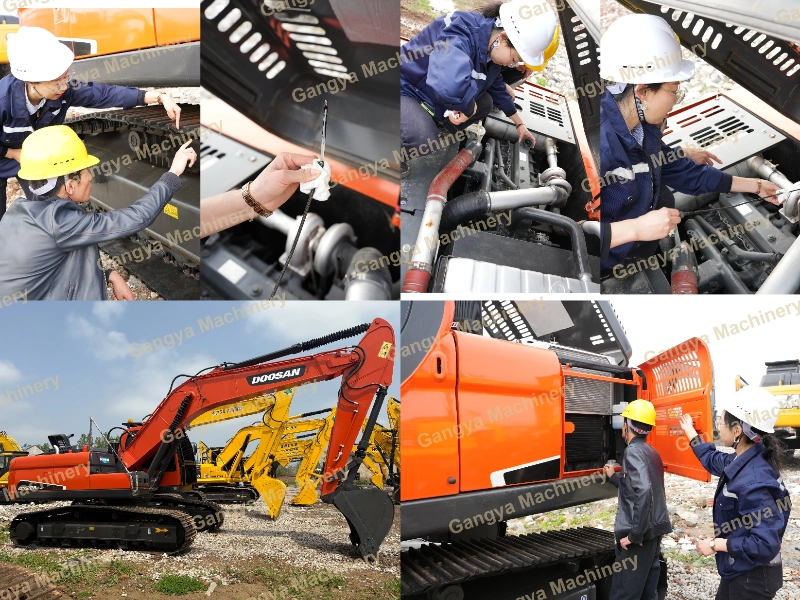
Used-Machine Inspection Points
Check Both Models
Before payment, confirm:
- cold start, smoke and engine blow-by
- engine response under working load
- hot hydraulic response
- combined boom, arm, bucket and swing movement
- straight travel and swing condition
- undercarriage wear
- visible leakage and structural repair
- machine identity and a current working video of the same machine
For a complete inspection process, use a separate used excavator inspection checklist rather than relying only on this model comparison.
R220LC-9S Inspection Priorities
- Engine blow-by and oil consumption: Heavy blow-by or obvious oil consumption may indicate expensive engine work.
- Arm-cylinder seal and guide condition: Check the cylinder rod, seal area and guide condition for leakage or uneven wear.
- Hot hydraulic speed: Run the machine until operating temperature and check whether movement becomes noticeably slower.
- Radiator cleanliness and working temperature: Inspect dust and blockage, then confirm that operating temperature remains stable during work.
- Boom-foot and main-frame repair marks: Look for cracks, welding, reinforcement and previous repairs around high-load structural areas.
These are inspection priorities based on used-machine experience.
They do not mean that every R220LC-9S has the same problem.
DX225LCA Inspection Priorities
- Black smoke and fuel-system condition: Check whether the engine produces heavy black smoke or loses power under load.
- Travel, swing and combined-movement balance: Compare left and right travel and check whether one movement feels noticeably weaker.
- Swing-motor leakage and abnormal sound: Inspect visible leakage and listen during repeated swing operation.
- Frame and corrosion condition: Check side structures, frame areas, covers and older repaired areas for serious corrosion or previous structural work.
- Starting system and aging wiring: Inspect cold starting, starter operation, connectors and visible wiring condition.
These are inspection priorities based on used-machine experience and observed cases.
They do not mean that every DX225LCA will have the same problem.
When Neither Model Fits
Do not force the decision between R220LC-9S and DX225LCA when the work is beyond the practical range of a 22-ton machine.
Reassess the machine size for:
- long-term mining
- large quarry work
- continuous heavy loading
- continuous breaker operation
- very high daily production
- large-bucket loading
In these conditions, a 30-36 ton machine may be more suitable.
Depending on local repair support and current machine condition, buyers may compare:
- CAT 336-class machines
- Komatsu PC360-class machines
- larger Hyundai models
- larger Doosan models
Also reconsider both models when local mechanics and parts suppliers have weak support for both.
These older mechanical-engine configurations may not fit every destination market.
Before purchase, buyers should confirm local emission requirements, machine-age limits, import rules and registration requirements with a customs broker or local import agent.
A supplier should not guarantee customs clearance for every destination.
Final Decision Checklist
| Your Situation | Recommended Direction |
| Mixed work, hard soil and strong Cummins support | Start with R220LC-9S |
| Normal earthmoving, trenching and smooth control | Start with DX225LCA |
| One machine is clearly cleaner | Choose condition first |
| Dealer market strongly recognizes Cummins | R220LC-9S may be easier to resell |
| Local Doosan support is mature | DX225LCA may be easier to support |
| Model or engine identity is unclear | Stop and verify before comparing price |
| Long-term mining or continuous heavy breaker work | Reassess a larger machine |
Do not buy only for the Cummins name.
Do not buy only because one machine feels smoother.
Choose by:
- jobsite requirements
- local repair support
- parts supply
- resale speed
- current machine condition
- current photos, videos and inspection evidence
Compare R220LC-9S and DX225LCA Options
Send us:
- destination country
- work type
- budget
- expected daily output
- local repair support
- attachment requirements
We can compare available stock or sourcing candidates according to:
- actual model identity
- year
- displayed hours
- engine
- paint condition
- undercarriage
- hydraulic response
- current working video
Availability changes. Final model, engine, year, displayed hours, configuration, price and condition should always be confirmed from the current machine.
| COMPARE R220LC-9S AND DX225LCA OPTIONS |
Related Buying Guides
- Hyundai vs Doosan Used Excavators
- How to Choose the Right Used Excavator Size
- Used Excavator Pre-Purchase Inspection Checklist
- What Videos Should You Request Before Buying a Used Excavator?
FAQ
Which is better, Hyundai R220LC-9S or Doosan DX225LCA?
There is no single winner.
R220LC-9S may fit mixed work, hard digging and markets with strong Cummins support.
DX225LCA may fit normal earthmoving, trenching and markets with mature Doosan support.
The condition of the actual machine still comes first.
Which model is better for normal earthmoving?
DX225LCA may be the better direction when smooth combined movement and long operating hours matter.
However, a cleaner R220LC-9S can still be the better used-machine purchase.
Which model is better for hard soil or mixed work?
R220LC-9S often feels firmer during digging and travel under load and may be more suitable for changing jobs.
Current engine and hydraulic condition should still be checked.
Is a Cummins-powered R220LC-9S always easier to repair?
No.
The advantage depends on local mechanics, local parts suppliers and actual engine support.
In a market with a large Doosan machine population, DX225LCA may be equally practical.
Should I buy a clean DX225LCA or an average R220LC-9S?
If both models can complete the work, we usually recommend the cleaner DX225LCA.
Better engine, hydraulic and undercarriage condition can reduce repair risk and future customer complaints.
How can I confirm whether the machine is R220LC-9S or R225LC-9T?
Do not rely only on exterior decals.
Check the original machine plate, serial information, engine information, actual configuration, current working video, quotation description and export document description.
Does a mechanical direct-injection engine mean the whole excavator is mechanical?
No.
Mechanical direct injection describes the engine fuel system.
The excavator can still use electrical components, sensors, electronic controls and hydraulic control systems.
Buyers should inspect the actual engine, wiring, control system and hydraulic response.
When should I choose a larger excavator instead?
Consider a larger machine for long-term mining, large quarry work, continuous breaker work, continuous heavy loading or very high production requirements.
Sources and Review Notes
This comparison is based on:
- Hyundai R220LC-9S official specification brochure
- Doosan DX225LCA official specification brochure
- practical inspection and operating observations from Anhui Gangya Machinery
- used-equipment sourcing, buyer feedback and export-market observations
Official specifications are used for model and engine reference.
Working-feel, inspection and buying recommendations are based on Anhui Gangya Machinery’s practical used-equipment experience.
Official specifications should still be checked against the exact machine version.
The machine plate, engine information, current photos, current working video and actual condition of the selected unit should take priority before purchase.