



This guide is written for used construction equipment dealers and importers who buy excavators for local inventory and resale.
Brokers and trading companies can also use it, although they may care more about sourcing speed, current machine information and margin room for the downstream transaction.
A contractor asks:
Can this excavator complete my work?
A dealer must also ask:
Can I sell this model locally?
What working margin may remain after realistic costs and risk?
How long may my capital stay in the machine?
Can I explain the condition clearly to my next customer?
| A good excavator is not automatically good dealer stock. A famous or attractively priced machine can still become difficult inventory when local demand is weak, repair support is limited or the condition is hard to explain. |
Quick Answer: What Makes a Good Resale Excavator?
Good resale stock should be:
- locally sellable— buyers recognize the brand, size or model.
- financially workable— enough margin remains after realistic costs and risk.
- reasonably liquid— the expected resale period fits the cash plan.
- locally supportable— parts and repair support reduce buyer hesitation, downtime and post-sale risk.
- clearly explainable— current evidence supports the condition presented to the next buyer.
If the model performs well and the dealer wants to build a long-term product line, repeat supply becomes an additional strategic advantage.
When a dealer asks me which excavator to buy, I do not begin with the machine I personally like. I first ask:
What already sells in your market?
Who will probably buy this machine?
What will they realistically pay, and what could stop the sale?
Dealer Resale Summary Guide
| Dealer Priority | Question Before Buying |
| Local demand | Do buyers already ask for this brand, size or model? |
| Model liquidity | Is the buyer and repair base large enough? |
| Expected working margin | What remains after realistic costs and risk? |
| Resale speed | Does the expected sales period fit the cash plan? |
| Condition control | Can preparation and repair cost be estimated? |
| Resale evidence | Can the machine be explained with current proof? |
| Local support | Are parts and technicians available? |
| Long-term repeat supply | Can similar machines be sourced again if the model succeeds? |
| A practical dealer stock candidate should be locally sellable, financially workable and clearly explainable. |
Reading Guide
- Local Demand and Model Liquidity
- Working Margin, Resale Speed and Capital Turnover
- Condition, Preparation and Complaint Risk
- Repair Support and Resale Evidence
- Stock Mix, Exit Plan and Repeat Supply
- When Dealers Should Walk Away
- Dealer Resale Selection Scorecard
- Final Recommendation
1. Start With Local Demand and Model Liquidity
A common sourcing mistake is choosing a machine because the dealer personally likes the brand or believes the model is technically better.
Personal experience matters, but local demand comes first. Before buying, check:
- which brands, sizes and models receive regular inquiries;
- what applications create demand;
- what customers can afford;
- which machines local workshops understand.
The right question is:
Which excavator fits the work, buying habits and repair environment of my local market?
Model Liquidity
I use model liquidity to describe how easily a model can attract enough local buyers, receive technical support and resell within an acceptable price and time range.
A well-known brand can help, but dealers should also consider the buyer group, accepted price range, parts availability and technician familiarity.
A common model bought too expensively can still be poor inventory. A less common model may work when the final buyer is already clear.
| I would rather recommend a familiar model in clear condition than a cheaper unfamiliar machine that may be difficult to explain and resell. |
Special models need a clear resale reason before purchase.
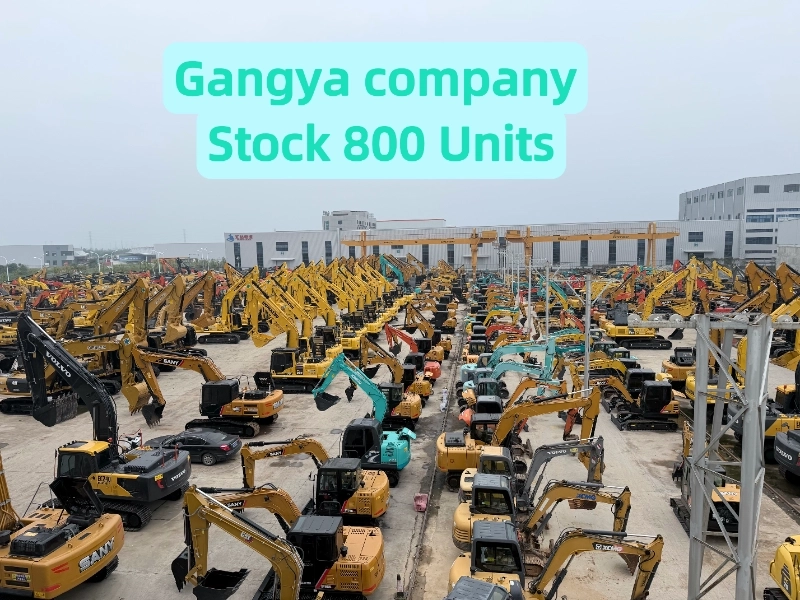
Excavators for Resale
2. Calculate Working Margin, Resale Speed and Capital Turnover
Many dealers first calculate:
Local selling price − supplier quotation
That is not the real profit.
| Expected Local Selling Price − Total Landed Cost − Local Preparation and Repairs − Selling and Holding Costs − Risk Allowance = Expected Working Margin |
Include costs that may appear before the machine becomes cash again: freight, destination charges, preparation, repairs, storage, financing and possible price adjustment.
Use recent completed sales and serious customer offers to estimate the local selling price.
| Do not use the highest online asking price as if it were a completed transaction. |
Margin and Resale Time Must Be Judged Together
A machine may show a higher expected margin but remain unsold for a long period. Another may earn less per unit but sell more consistently and allow the same capital to be reused.
Review three things together:
- Expected Working Margin— what may remain from the sale.
- Resale Speed— how long the machine may stay in inventory.
- Capital Turnover— how often the same capital can return and be reused.
There is no universal safe inventory period. Judge different sizes by their own sales cycles and use recent data: inquiries, completed sales, time to sell, price reductions, preparation costs, complaints and repeat requests.
| Your own completed sales usually provide a better stock signal than a global “best resale excavator” list. |
3. Control Condition, Preparation and Complaint Risk
A dealer does not inspect a machine only to decide whether it can work.
The commercial questions are:
- How much preparation will it need?
- Which problems may reduce the price or create complaints?
- Can the condition be explained honestly?
- Will enough margin remain after preparation?
Engine, hydraulic, undercarriage and structural condition affect both cost and customer confidence.
For detailed checking, use the Used Excavator Pre-Purchase Inspection Checklist. Here, focus on the business effect.
A worn undercarriage may be acceptable when the replacement cost is known and reflected in the price. An uncertain engine or hot hydraulic problem may be harder to manage because the final cost is unclear.
| A known repair cost can sometimes be easier to manage than an uncertain mechanical risk. |
A visible problem can be priced. A condition issue that cannot be tested, estimated or explained may grow after arrival.
Original paint and repainting should be judged by transparency, target-market preference and the condition beneath the paint. Preparation may improve presentation, but it should not hide structural repair.
What a Wrong Stock Decision May Cost
A poor stock decision may hold capital, force a price reduction, increase preparation spending, create complaints and weaken trust.
| The cost may include lost time, weaker capital efficiency and lower customer confidence—not only the repair bill. |
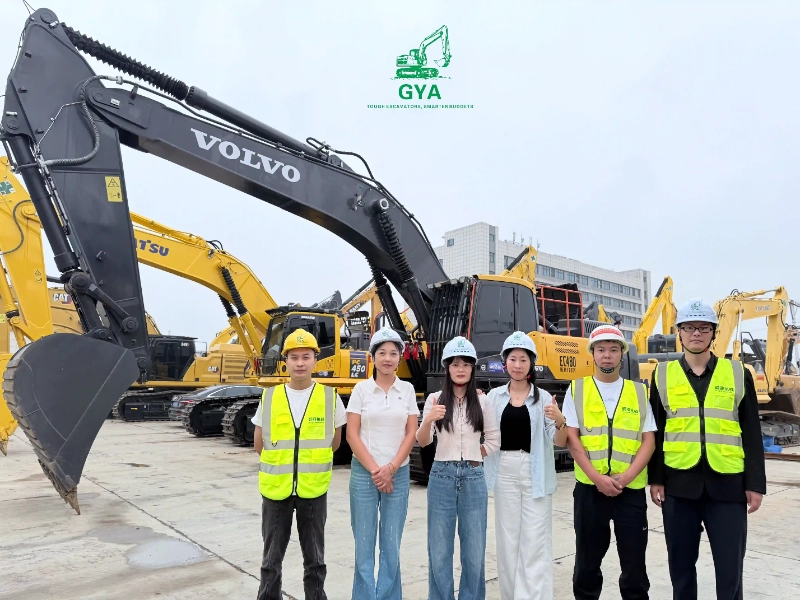
Excavators for Resale
4. Check Local Repair Support and Resale Evidence
Global brand reputation is useful, but local support may matter more to the final customer.
Before adding a model, ask:
- Are normal service and wear parts available?
- Can local workshops repair the engine and hydraulic system?
- Can technicians diagnose the electrical system?
- Is the local market comfortable with this machine generation?
Older or discontinued models should not be rejected only because of age.
In some markets we serve where older emission generations remain acceptable, older direct-injection machines still attract buyers because local technicians understand them and common parts are available.
They become risky when the buyer base is weak, parts are difficult to obtain or the price does not compensate for the risk.
Resale Evidence Readiness
A machine that is difficult to explain may also be difficult to resell.
Before purchase, check four evidence areas:
- Identity— model, serial number and machine plate.
- Current condition— current photos of paint, structure and undercarriage.
- Working condition— cold start, warm operation and travel videos.
- Preparation disclosure— repainting, repairs and planned work.
In our daily business, many brokers first ask:
Is the machine available?
Can you send real photos and videos quickly?
If it is sold, can you find another one?
Is there enough margin room for the downstream deal?
For brokers, fast, accurate machine information may matter almost as much as stock.
5. Build Stock With an Exit Plan and Repeat Supply
A practical stock plan can use three directions.
Core stock focuses on models with proven demand, familiar applications and established local support.
Selective opportunity stock may include cleaner, newer or higher-margin machines, but it still needs a clear buyer group.
Customer-specific sourcing is often safer for uncommon models, special attachments, very large machines or narrow demand.
The mix should follow actual sales, capital, current inquiries and local season—not a fixed ratio.
Define the Exit Plan Before Buying
Before paying, decide:
- Primary and backup buyers— Who is most likely to buy it, and who else may accept it?
- Target selling price— What is the realistic goal?
- Minimum acceptable price— At what point should capital be released?
- Review point— When should price or sales strategy be reconsidered?
Use your own historical resale time for similar brands and sizes as the benchmark.
The Three-Sentence Resale Test
Before buying, answer:
- Who is this machine for?
- Why is it worth the expected local price?
- What evidence will support the condition you plan to describe—and what uncertainty remains?
If those answers are unclear, it may be safer to source the machine against a confirmed customer request rather than hold it as general inventory.
| The goal is not perfect paperwork. It is knowing what can be shown, what must be disclosed and what should affect the price. |
Repeat Supply Potential
One cheap machine is not a long-term strategy.
For a one-off purchase or a new-market test, repeat supply is secondary. It becomes more important when building a product line or planning regular restocking.
Then ask whether similar machines can be sourced again and future batches supported consistently.
6. When Dealers Should Walk Away
Consider rejecting or delaying the purchase when:
- Local demand is unclear— there is no identifiable buyer group or realistic application.
- Expected working margin cannot be estimated— important repair, logistics or local costs remain unknown.
- The condition cannot be explained— major repairs, structure, identity or operation cannot be clarified.
- Local repair support is too weak— parts or technical support may create unacceptable downtime.
- Current evidence is inconsistent— photos, videos and identification do not support the same machine.
- Import eligibility is unconfirmed— year, identity, emission or destination requirements remain unclear.
- The decision depends only on a low quotation— there is no clear buyer, accepted price or resale plan.
Import rules vary by country and may change. Confirm current requirements with the buyer’s local customs agent or relevant authority.
| The best time to reject a risky machine is before its low price becomes slow inventory, uncertain repair cost or a difficult customer complaint. |
7. Dealer Resale Selection Scorecard
Score each area from 0 to 2:
- 2 = Confirmed and favorable
- 1 = Acceptable, but uncertain or needs price compensation
- 0 = Weak, unsupported or not confirmed
For a one-off purchase or a new-market test, treat repeat supply as secondary. It becomes more important when building a long-term product line.
| Dealer Check | Scoring Question |
| Local demand | Do real customers ask for this brand, size or model? |
| Model liquidity | Is the buyer and repair base broad enough? |
| Local selling price | Is the expected price based on real market evidence? |
| Expected working margin | Does enough margin remain after realistic costs? |
| Resale speed | Does the expected sales period fit the cash plan? |
| Condition risk | Can preparation and repair cost be estimated? |
| Repair support | Can local parts suppliers and technicians support it? |
| Resale evidence | Can the condition be explained with current proof? |
| Import eligibility | Can the machine be legally imported and used locally? |
| Repeat supply | If the model succeeds, can similar machines be sourced again? |
Use the score to compare machines, not as a universal guarantee.
Identity problems, unexplained structural issues or unconfirmed import eligibility should not be ignored because the total score is high.
| Local demand, margin, condition and import eligibility help decide whether the current transaction is worth doing. Repeat supply helps decide whether the model deserves a long-term place in inventory. |
Final Recommendation
The best dealer stock is rarely the cheapest excavator or the machine with the highest possible margin.
Start with local demand and model liquidity. Then calculate the expected working margin, consider resale speed, review condition and preparation risk, confirm local repair support and make sure the machine can be explained clearly to the next customer.
Build core inventory around proven models, use special machines selectively and source narrow-demand equipment after customer requirements are clearer.
| Choose machines your market understands, your customers can support, your sales team can explain and your business can source again when the model proves successful. |
That normally creates a stronger long-term dealer business than chasing one unusually cheap machine.
Final Dealer Buying Checklist
☐ Local demand and model recognition confirmed
☐ Primary and backup buyer groups identified
☐ Local selling price based on real market evidence
☐ Expected working margin calculated
☐ Expected resale period and exit plan reviewed
☐ Preparation and repair allowance included
☐ Engine, hydraulics, undercarriage and structure reviewed
☐ Identity, condition, paint and repair evidence can be explained
☐ Local parts and technical support confirmed
☐ Import eligibility checked
☐ Repeat supply considered for long-term product lines
Ask for Resale Stock Recommendation
Send your:
- country or target market;
- main customer type;
- brands, sizes or models that sell locally;
- required quantity;
- approximate budget range.
We can discuss current inventory, suitable resale directions, condition, evidence availability, preparation needs and sourcing support based on your market.
| Ask for Resale Stock Recommendation |
Related Buying Guides
- Used Excavator Pre-Purchase Inspection Checklist
- Original Paint vs Repainted Used Excavators
- Current Stock vs Sourcing Support
Frequently Asked Questions
What Makes a Used Excavator Easy to Resell?
Local demand, accepted pricing, repair support and clear condition all help. A famous brand alone does not guarantee fast resale.
Is the Cheapest Used Excavator Best for a Dealer?
No. Repairs, holding time, weak demand or price reductions can remove the apparent saving. Calculate expected working margin, not purchase price alone.
Which Excavator Brand Has the Best Resale Value?
There is no single answer. Local recognition, parts supply, repair experience and accepted prices matter more than a global ranking.
Is a Repaired Used Excavator Always a Bad Dealer Purchase?
No. What matters is what was repaired, the current condition and whether cost and risk can be estimated. An explained repair may be easier to manage than an uncertain problem.
What Evidence Should a Dealer Request Before Buying?
Request current identity information, photos, working videos and clear repair or preparation disclosure. All evidence should refer to the same machine.
Review Notes
This guide is based on our experience supporting overseas dealers, importers and brokers with sourcing, condition review, preparation and export coordination. Market demand, resale prices, import requirements and repair conditions vary by country, so confirm current local conditions before purchasing inventory.