



Written and reviewed by KAN, Owner of Anhui Gangya Construction Machinery Sales Co., Ltd.
Experience basis: This guide is based on our used-excavator preparation, repair verification, customer confirmation, dismantling, loading and export experience.
Last reviewed: July 2026
A pre-purchase inspection helps a buyer decide whether a used excavator is worth buying.
Final condition confirmation serves a different purpose.
After a machine has been collected, cleaned, repaired, repainted, maintained or fitted with attachments, the buyer should receive updated evidence showing the condition of the exact machine that is preparing to enter the shipping process.
The original photos and videos remain useful as a buying reference.
However, they may no longer represent the final machine after preparation work has been completed.
When a component is repaired, replaced or installed, the final evidence should show that specific work and the result after retesting.
Final condition confirmation should show:
- whether the machine identity is unchanged;
- what preparation was completed;
- what the machine looks like now;
- whether repaired functions were tested again;
- which attachments are included;
- whether any condition, cost or preparation detail changed.
A pre-purchase inspection helps the buyer decide whether to buy. Final condition confirmation records the identity, completed preparation, current condition and disclosed changes of the exact machine before it enters loading.
Final confirmation is a condition record at a specific time.
It is not a guarantee that a used machine will never develop a future problem.
Quick Answer
| Buyer Question | What Should Be Reconfirmed |
| Is it the same machine? | Model, machine plate, engine plate, dashboard and identifiable machine details |
| What preparation was completed? | Repairs, maintenance, repainting, undercarriage work and attachment installation |
| Does the machine still operate correctly? | Updated engine, hydraulic, travel and swing evidence |
| Were repaired areas tested again? | Evidence related to the repaired component and the result after operation |
| What does the machine look like now? | Updated front, rear, left and right appearance after preparation |
| What will be shipped? | Final attachments, additional parts and important dismantled components |
| Did anything change? | New faults, additional repairs, costs, substitutions or differences from the original agreement |
| Is the machine ready for loading? | The buyer has reviewed the final evidence and accepted the completed condition according to the transaction terms |
The final evidence should be recorded after the agreed preparation work.
It should remain connected to the exact machine through:
- machine plate;
- serial information;
- engine plate;
- dashboard;
- identifiable exterior features.
Final Condition Confirmation Process
| Confirmation Stage | What It Means |
| Original Agreement | The machine condition, repair, paint, attachments and preparation scope are agreed |
| Preparation Completed | Cleaning, repair, repainting, maintenance or attachment work is completed |
| Updated Evidence | New overall photos, operating videos, machine identity and prepared areas are recorded |
| Repair Verification | Repaired or replaced components are operated and checked again |
| Change Review | Any difference from the original agreement is explained to the buyer |
| Buyer Confirmation | The buyer reviews the updated evidence and completed condition |
| Ready for Loading | The machine can enter the agreed loading process according to the written transaction terms |
The process should remain clear:
Original Agreement → Preparation Completed → Updated Evidence → Repair Verification → Change Review → Buyer Confirmation → Ready for Loading
Reading Guide
- Why Final Confirmation Is Different From Pre-Purchase Inspection
- Confirm the Same Machine and Updated Evidence
- Compare the Original Agreement With Completed Preparation
- Retest Repairs and Replaced Components
- Confirm Final Appearance, Attachments and Large-Machine Parts
- Record Any Change Before Loading
- Third-Party Inspection, Video Calls and Final Payment
- Final Review Before the Machine Is Ready for Loading
- Final Recommendation
1. Why Final Confirmation Is Different From Pre-Purchase Inspection
Before paying a deposit, the buyer may already have reviewed:
- cold-start evidence;
- engine sound and smoke;
- hydraulic operation;
- travel;
- swing;
- undercarriage;
- machine plate;
- general condition.
That evidence helps the buyer decide whether to purchase the machine.
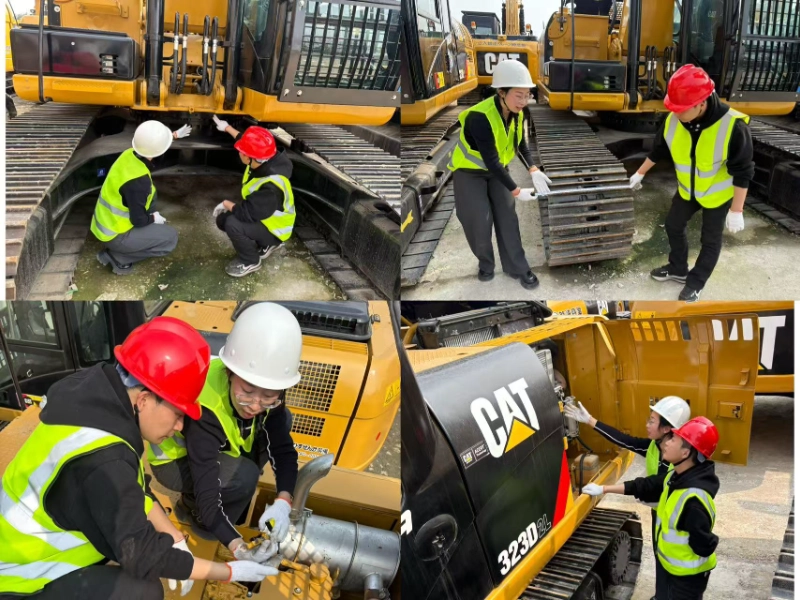
After the machine is collected, it may receive different types of preparation.
Appearance Preparation
Appearance work may include:
- cleaning;
- full repainting;
- partial repainting;
- paint touch-up.
Appearance preparation should be followed by updated overall photos so the buyer can review the final exterior condition.
Mechanical or Configuration Work
Mechanical or configuration work may include:
- oil-seal replacement;
- engine repair;
- hydraulic or pump repair;
- undercarriage replacement;
- maintenance;
- attachment installation;
- air-conditioning repair.
Mechanical repairs, replaced components and installed equipment should be supported by evidence related to the completed work and, where practical, the result after retesting.
A video recorded before an engine repair cannot fully represent the engine after the repair.
A photograph taken before repainting cannot show the final appearance.
An undercarriage video recorded before replacement cannot confirm the installed parts.
The final evidence should match the condition that will enter the shipping process—not only the condition shown before the deposit.
This does not mean every original photo and video must be repeated without purpose.
The updated package should focus on:
- the final overall machine;
- completed preparation;
- repaired or replaced areas;
- final attachments;
- current operation;
- current identity;
- disclosed changes.
2. Confirm the Same Machine and Updated Evidence
Before reviewing appearance or repair work, the buyer should confirm that the updated evidence still belongs to the agreed excavator.
The final package normally includes:
- overall machine photos;
- machine plate;
- engine plate;
- dashboard;
- displayed working hours;
- visible warning-light status;
- cab;
- counterweight;
- boom;
- arm;
- undercarriage;
- final bucket and attachments.
The dashboard hour reading should be rechecked together with the updated machine condition and previous verification, not treated as an isolated number.
In our normal process, the updated machine information is recorded after preparation is completed.
We normally provide:
- front, rear, left and right photos;
- engine-start evidence;
- engine sound;
- smoke;
- operating videos under throttle;
- travel;
- swing;
- undercarriage;
- dashboard;
- machine and engine plates.
The evidence should remain traceable to one identifiable excavator.
Detailed same-machine verification methods are covered in a separate guide.
3. Compare the Original Agreement With Completed Preparation
The buyer should be able to compare:
What was agreed?
with:
What was actually completed?
General descriptions such as:
Fully refurbished.
or:
Completely serviced.
are not enough to explain the final machine.
The completed work should be stated more specifically.
| Agreed Preparation | What Should Be Confirmed After Completion |
| Full Repaint | Updated overall photos show the completed exterior from all sides |
| Partial Repaint | Repainted areas and the overall final appearance are shown |
| Paint Touch-Up | The repaired areas and their effect on the complete machine are shown |
| Repair Oil Leak | The repaired area is operated and checked again for visible leakage |
| Engine Repair | Updated start, sound, smoke and operating evidence are provided |
| Hydraulic or Pump Repair | Relevant hydraulic functions are operated and the final movement, response and visible repaired area are shown |
| Undercarriage Replacement | Photos and videos show the final installed parts |
| Air-Conditioning Repair | The repaired cooling performance is demonstrated |
| Maintenance | The agreed maintenance scope is recorded |
| Attachment Installation | The installed attachment and relevant operating condition are shown |
The purpose is not to make every used excavator look new.
The purpose is to show the customer:
- what work was completed;
- what the machine looks like now;
- whether the result matches the agreed direction.
Even after partial repainting, we normally show the whole machine from:
- front;
- rear;
- left side;
- right side.
We do not show only the repaired paint area.
The buyer should be able to judge the final overall appearance.
If the customer requested paint touch-up for selected areas, the completed work is also shown.
4. Retest Repairs and Replaced Components
Repair completion should not rely only on a verbal statement.
When practical, the repaired function should be tested again.
| Repair or Replaced Area | Final Evidence We Normally Provide |
| Oil Seal | Operate the machine and recheck whether the repaired area still shows leakage |
| Engine Repair | Show engine start, sound, smoke and visible exhaust condition |
| Hydraulic or Pump Repair | Operate the relevant hydraulic functions and show final movement, operating response and visible condition around the repaired area |
| Travel Repair | Test travel and record the operating result |
| Swing Repair | Test swing operation and visible response |
| Undercarriage Replacement | Show the installed chains, shoes, rollers or other replaced parts |
| Hydraulic Hose or Piping | Show the completed installation and check visible leakage |
| Air Conditioning | Demonstrate the cooling result after repair |
For example, after replacing an oil seal, we do not rely only on a photo of the new part.
We operate the relevant function and check the area again.
A clean surface immediately after washing does not prove that a previous leak has been solved.
The result should be checked after the machine operates.
After engine work, we review:
- start;
- sound;
- smoke;
- visible exhaust condition;
- operating result.
After hydraulic or pump work, we operate the relevant functions and provide updated evidence.
After undercarriage replacement, we show the installed parts through new photos or videos.
Repair verification should focus on the component that changed and the operating result after the work.
Detailed pre-purchase engine and hydraulic inspection methods are covered in the related inspection and video guides.
5. Confirm Final Appearance, Attachments and Large-Machine Parts
The final shipment is not only the excavator body.
The buyer should also confirm the agreed:
- bucket;
- additional bucket;
- breaker;
- quick coupler;
- breaker piping;
- rubber pads;
- other attachments;
- additional parts;
- repaired air-conditioning function.
| Item | What Should Be Confirmed |
| Standard Bucket | Final bucket type, visible condition and inclusion |
| Additional Bucket | Quantity, type and whether it is included |
| Breaker | Model direction, visible condition, hoses and agreed included items |
| Quick Coupler | Installation and operating condition |
| Breaker Piping | Final installation and visible condition |
| Rubber Pads | Quantity and installation status |
| Other Attachments | Final quantity, visible condition and inclusion |
| Repaired Air Conditioning | Cooling performance after repair |
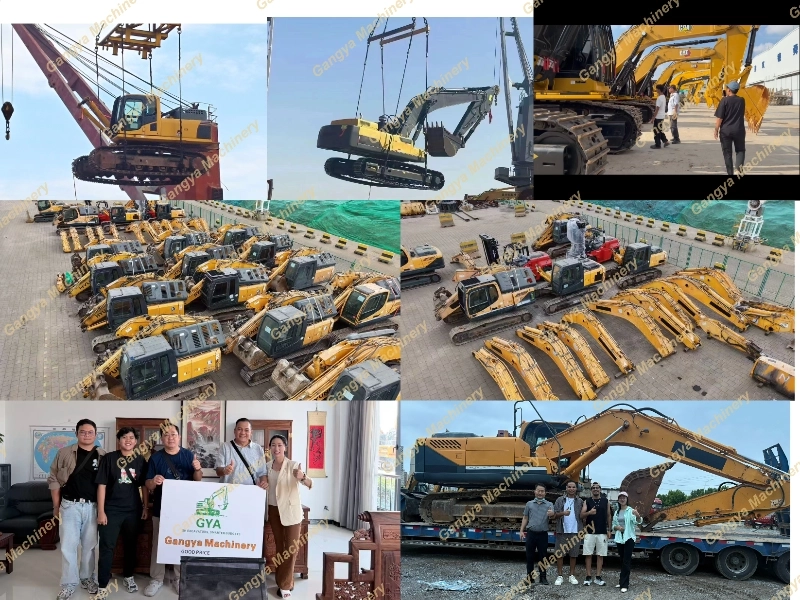
We normally provide photos or videos of the attachments requested by the customer.
The customer should understand:
- what is installed;
- what is included;
- what will be shipped separately;
- what preparation was completed.
Large-Machine Components Before Dismantling
Large excavators may need to be dismantled before transport.
Important components may include:
- boom;
- arm;
- bucket;
- counterweight;
- railings;
- hydraulic lines;
- pins;
- other removed parts.
Before dismantling, we confirm these parts and their current condition.
We can also apply identification marks according to the customer’s requirements.
When the customer can visit in person:
The customer may place or supervise the preferred marks.
When the customer cannot visit:
We can apply the agreed numbers, symbols or markings according to the customer’s instructions.
The customer may specify:
- which components should be marked;
- where the marks should be placed;
- which number or symbol should be used.
The purpose is to keep them identifiable during dismantling, preparation and transport.
Detailed same-machine and removed-part verification is covered separately.
6. Record Any Change Before Loading
Major differences from the original agreement are uncommon.
However, unexpected issues may still appear during testing or preparation.
Examples include:
- a new fault appears;
- an additional repair becomes necessary;
- a component fails after the original inspection;
- a requested attachment needs adjustment;
- the completed preparation differs from the original plan;
- additional cost needs to be discussed.
Changes can also come from the buyer.
For example, the buyer may request:
- another oil seal to be replaced;
- breaker piping to be installed;
- an additional attachment;
- extra paint touch-up;
- a different preparation item.
A change requested by the buyer during preparation should also be recorded clearly.
This is different from an unexpected machine fault that appears after the original agreement.
The updated scope, cost and effect on timing should be confirmed according to the transaction terms before the additional work continues.
Do not silently change the machine, repair scope, attachment, condition or cost.
| New Situation | What Should Happen |
| New Fault Appears | Inform the buyer and provide updated evidence |
| Additional Repair Is Needed | Explain the problem, repair option and related cost |
| Buyer Requests Additional Work | Record the new requirement and confirm the updated scope, cost and timing before continuing |
| Buyer Accepts the Repair | Record the agreed work before continuing |
| Buyer Does Not Accept | Discuss another solution or another machine |
| Attachment Changes | Explain the difference and obtain buyer approval |
| Preparation Scope Changes | Update the written agreement or transaction record |
| Final Condition Differs | Provide updated photos or videos before loading continues |
In our experience, major unexpected changes do not happen often.
However, when a new problem appears outside the original repair list, we inform the customer.
We explain:
- what happened;
- what repair may be required;
- what cost may be involved;
- what effect the issue may have.
The customer can then decide whether to:
- accept the condition;
- approve the additional repair;
- discuss another solution;
- choose another machine.
The final decision belongs to the buyer after the updated condition is disclosed.
The buyer should not discover an important change only after the machine arrives.
7. Third-Party Inspection, Video Calls and Final Payment
Many overseas customers cannot visit China before shipment.
They may still request additional confirmation.
We support:
- live video calls;
- customer-appointed inspectors;
- third-party inspection;
- detailed videos of repaired areas;
- direct explanation of completed work.
During a live video call, we can show:
- the complete machine;
- engine operation;
- repaired areas;
- dashboard;
- machine plate;
- engine plate;
- attachments;
- final appearance.
When a customer arranges an inspector, we can cooperate according to:
- agreed inspection time;
- machine location;
- current preparation status.
We also explain repaired areas one by one when the customer requests more detail.
Final Payment Timing
In our normal transactions, final payment is usually arranged after:
- the buyer has reviewed the final machine condition;
- completed preparation has been shown;
- major changes have been disclosed;
- the machine has entered the agreed loading stage for transport to the port.
The exact payment point may vary according to:
- machine type;
- transport arrangement;
- loading method;
- transaction terms;
- written agreement.
The final payment condition should follow the Proforma Invoice (PI) or another agreed transaction document.
This article does not create one mandatory payment rule for every transaction.
The written commercial terms remain the final reference.
8. Final Review Before the Machine Is Ready for Loading
Before the machine enters the agreed loading process, the buyer should have one clear final-condition summary.
| Final Review Area | What Should Be Clear |
| Machine Identity | The updated evidence matches the agreed excavator |
| Final Appearance | The buyer has reviewed the machine after cleaning, repainting or preparation |
| Current Operation | Engine, hydraulics, travel and swing evidence has been reviewed |
| Completed Repairs | The agreed repair work has been shown and retested |
| Paint Status | The final paint condition matches the agreed scope and updated photos |
| Undercarriage | Final condition or replaced parts have been shown |
| Attachments | Included equipment and additional items are confirmed |
| Large-Machine Parts | Important components and agreed marks are recorded before dismantling |
| New Changes | Any difference from the original agreement has been disclosed |
| Buyer Confirmation | The buyer has reviewed the final evidence and completed scope |
| Ready for Loading | The machine may enter the agreed loading process according to the written terms |
Final condition confirmation should record:
- which machine will be shipped;
- what work was completed;
- what the machine currently shows;
- what changed;
- what the buyer accepted.
It does not guarantee:
- that the used machine will never develop a future fault;
- that every internal component can be judged through photos and videos;
- that future operation and maintenance will not affect condition.
Used machines still contain:
- normal wear;
- age-related components;
- internal parts that may not be fully visible;
- operating risks affected by future use and maintenance.
Final confirmation is a time-specific condition record—not a zero-failure guarantee.
9. Final Recommendation
A used excavator should not move from preparation directly into loading without a final condition review.
The buyer should be able to answer:
Is this the same machine?
What preparation was completed?
What repairs were tested again?
What does the machine look like now?
Are the attachments and configuration correct?
Were important large-machine components identified?
Was any new problem, additional work or cost disclosed?
Has the final condition been reviewed before loading?
The strongest process is:
Original Agreement → Preparation Completed → Updated Evidence → Repair Verification → Change Review → Buyer Confirmation → Ready for Loading
A pre-purchase inspection answers:
Should I buy this machine?
Final condition confirmation answers:
What exact machine, condition, configuration and completed preparation will now enter the shipping process?
That difference should remain clear.
Ask for Final Machine Confirmation
Before loading, ask for one updated final-condition package covering:
- machine identity;
- current operation;
- completed repairs;
- final appearance;
- attachments;
- important removed components;
- changes from the original agreement.
The evidence should match the exact machine that has completed preparation and is ready to enter the agreed loading process.
| ASK FOR FINAL MACHINE CONFIRMATION |
Frequently Asked Questions
What Should I Confirm Before a Used Excavator Is Shipped?
Confirm:
- machine identity;
- updated operating evidence;
- completed repairs;
- final appearance;
- undercarriage;
- attachments;
- important removed components;
- any change from the original agreement.
The evidence should reflect the machine after preparation.
Is Final Condition Confirmation the Same as a Pre-Purchase Inspection?
No.
A pre-purchase inspection helps the buyer decide whether to purchase the machine.
Final condition confirmation records the machine after agreed preparation and before it enters loading.
Should I Request New Videos After Repairs or Repainting?
Yes, when the repair or preparation changes the machine condition.
The updated evidence should focus on:
- repaired areas;
- replaced components;
- installed attachments;
- final operation;
- final overall appearance.
Appearance work such as cleaning or repainting may mainly require updated overall photos.
Mechanical repairs or replaced components should be supported by evidence related to the completed work and, where practical, the result after retesting.
How Can I Confirm That Agreed Repairs Were Completed?
Ask for evidence related to the specific repair.
For example:
- recheck an oil-seal area after operation;
- show engine performance after engine work;
- operate hydraulics after hydraulic or pump repair;
- show the final undercarriage after replacement;
- demonstrate air-conditioning performance after repair.
The evidence should focus on what changed and the result after the work.
What Happens If the Machine Condition Changes Before Shipment?
The supplier should disclose the change and provide updated evidence.
The buyer should be able to:
- accept the condition;
- approve additional repair;
- discuss another solution;
- consider another machine.
Important changes should not be handled silently.
A buyer-requested addition should also be recorded clearly because it may change the preparation scope, cost or timing.
Can I Arrange a Third-Party Inspection or Live Video Call?
Yes.
The buyer may arrange a third-party inspector or request a live video call when an in-person visit is not practical.
The supplier can show:
- the complete machine;
- operating condition;
- repaired areas;
- dashboard;
- plates;
- attachments;
- final appearance.
Does Final Confirmation Guarantee That the Excavator Will Have No Future Problems?
No.
Final confirmation records:
- machine identity;
- visible and operating condition;
- completed preparation;
- disclosed changes;
- available evidence;
at the time before loading.
It cannot guarantee that a used machine will never develop a future problem.
| Experience note: These recommendations are based on our used-excavator preparation, repair verification, customer confirmation, dismantling, loading and export experience. Final evidence, repair scope, loading method and payment timing vary by machine, customer requirement and written transaction terms. |