



Written by Kan Jianya, Company Representative at Anhui Gangya Construction Machinery Sales Co., Ltd.
Experience basis: 12 years in used construction equipment trading, rental, and export.
Last reviewed: September 2026
Quick Answer
Before paying for a used excavator overseas, confirm the actual machine’s identity, inspect its structure and undercarriage, watch a continuous first-start video where practical, and test the hydraulic, travel, and swing functions after warming. Ask the supplier to show your concerns during a live call instead of relying on edited clips or old photos.
Current video can reveal slow or jerky movement, visible leaks, obvious engine blow-by, abnormal sounds, a weak travel side, visible slew-ring movement, and undercarriage wear. It cannot confirm exact hydraulic pressure, internal wear, remaining service life, or genuine total operating hours.
A machine showing obvious continuous blow-by, serious structural damage, unresolved abnormal engine or hydraulic noise, or major functional problems should not be approved for purchase as-is. Require repair and re-testing, arrange an independent inspection, or reject the machine.
Contents
- What Remote Evidence Can Confirm
- What to Ask the Supplier to Show
- Structure and Undercarriage
- Engine Startup and Blow-By
- Hydraulics, Travel, and Swing
- CAT 320D2L Buyer Case
- Decision Rules
- Final Checklist
What Remote Evidence Can and Cannot Confirm
For an overseas buyer, a remote inspection is a screening process. It should lead to one decision: proceed, inspect further, repair and re-test, or reject the machine.
| Remote evidence can help reveal | Remote evidence cannot prove |
| Exterior condition, visible repairs, and leaks | Hidden internal damage |
| Movement speed, hesitation, jerking, or drift | Exact hydraulic pressure or pump condition |
| Visible exhaust smoke and obvious blow-by | The exact internal cause or remaining engine life |
| Abnormal engine or hydraulic sounds | The source of every sound |
| A weak travel side or visible slew-ring movement | Measured wear against the manufacturer’s limit |
| Track, shoe, sprocket, idler, and roller condition | Exact remaining undercarriage life |
| The displayed hour-meter reading | Genuine total operating hours |
Wind, phone microphones, camera exposure, viewing angle, dirt, and fresh paint can affect what the buyer sees or hears. Incomplete evidence is a reason to request more evidence; it is not evidence that the machine is in good condition.
What to Ask the Supplier to Show
Use one clear sequence so the supplier cannot replace important tests with a general walkaround.
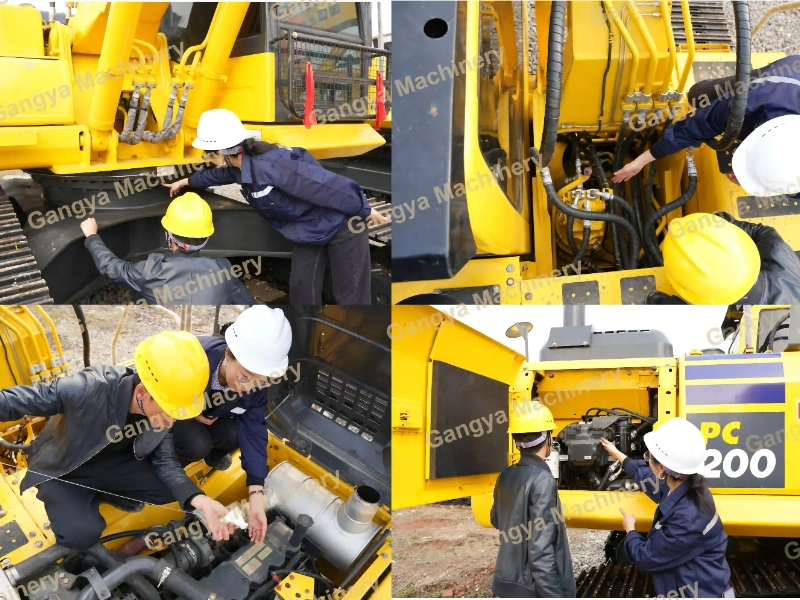
- Confirm the actual machine.Ask for a continuous view of the full excavator, serial plate, hour meter, cab, working equipment, engine compartment, pump area, and both undercarriage sides. Confirm whether it is in the seller’s yard or another location.
- Request a first-start video where practical.The recording should begin before starting and continue through initial idle, exhaust, monitor warnings, vibration, leaks, and unusual sounds. A clip labelled “cold start” does not prove the engine was cold if it had already been warmed. Ask to see the temperature display before starting when available.
- Operate the machine after warming.Test the boom, arm, bucket, swing, blade if fitted, and auxiliary functions individually, then test combined movements. Watch for inconsistent speed, hesitation, jerking, interruption, drift, or a clear change after warming.
- Test both travel sides and swing.Show forward and reverse travel, each side separately, straight travel on suitable ground, steering, swing in both directions, starting, stopping, and braking. Listen for abnormal sounds and look for visible movement between the upper structure and undercarriage.
- Show close-up condition.Record boom and arm weld areas, pins and bushings, cylinder rods, hoses, pump area, track chains, shoes, sprockets, idlers, rollers, guards, and visible leakage. One distant walkaround is not enough.
- Let the buyer direct part of the video.During a live call, ask the operator to show a mark, component, or movement selected by the buyer. This helps confirm that the video is current and belongs to the machine being discussed.
- Reconfirm before the final payment and loading.Match the machine, serial details, agreed repairs, and current condition again. Keep the quotation, photos, videos, chat records, repair evidence, and third-party report together.
Inspect the Structure and Undercarriage
Check the boom, arm, linkage, frames, counterweight, cab, and visible weld areas for cracks, grinding, irregular welds, reinforcement plates, distortion, mismatched paint, and concealed leakage.
Repainting is common and is not automatically a defect. What matters is the condition underneath. Fresh paint should never replace close-up evidence of high-stress areas. If a crack or major reinforcement is visible, request an explanation and a specialist assessment rather than judging it from appearance alone.
Change the load direction slowly to reveal movement at the bucket, arm, boom base, and linkage. Some clearance is expected on a used machine, but video cannot determine whether it is within a model-specific wear limit. Request a physical measurement when the movement could affect the buying decision.
Inspect both sides of the undercarriage. Ask for close views of track chains, shoes, sprocket teeth, idlers, top and bottom rollers, guards, bolts, track tension, leakage, and uneven wear.
Undercarriage wear is not automatically a reason to reject an excavator. For a dealer, the decision depends on the replacement scope and whether the landed cost still leaves enough resale margin. Any replaced parts must be described precisely. New chains and track shoes do not make the complete undercarriage new when the rollers, sprockets, or idlers remain in service.
Check the Engine Startup and Blow By
The first-start video should show the engine before starting, the start itself, exhaust, initial idle, warning lights, vibration, leakage, and unusual sounds. A warm-engine operating clip may hide startup symptoms and should not be the only engine evidence.
Interpret smoke in context. A brief puff during startup is different from heavy smoke that continues after the idle stabilizes. Ambient temperature, engine temperature, fuel, load, and camera exposure can affect what appears on screen. Video alone cannot identify the exact internal cause.
An experienced operator can demonstrate the crankcase blow-by check only when it can be done safely and according to the machine’s operating procedure. Some vapor can vary with temperature and engine condition, so one unclear image should not be treated as a universal pass-or-fail test.
However, obvious continuous blow-by during a proper check is a serious warning. The machine should not be approved as-is. Ask the supplier to repair it and provide a new first-start and operating test, arrange an independent inspection, or select another machine. A statement that the engine was repaired is not a substitute for new evidence.
Also inspect engine oil, coolant condition, hoses, belts, mounts, visible leaks, and abnormal knocking or rough sound. Never open a hot cooling system. Use oil analysis or further mechanical testing when the machine value or uncertainty justifies it.
Test Hydraulics Travel and Swing
A walkaround cannot show how the excavator behaves under operation. Test individual hydraulic functions first and then combined movements after the machine warms up.
Watch whether the boom, arm, bucket, and swing respond smoothly and consistently. Hesitation, jerking, interruption, excessive drift, slow response, or a clear speed difference requires further investigation. Listen near the pump, main control valve, cylinders, swing area, and travel motors. Remote audio may reveal an abnormal sound, but it rarely identifies the cause.
A supplier may demonstrate the machine lifting or supporting part of its body with the boom and bucket. This shows that it can produce force under that test condition. It does not prove correct hydraulic pressure, pump health, combined-operation performance, or long-term reliability.
Test each travel side separately and both sides together. Check for one weak or slow side and observe straight travel on suitable, reasonably level ground. Ground condition, track tension, engine speed, and operator input can influence the result, so video is a warning-sign check rather than a measured travel-motor diagnosis.
During swing, observe smooth acceleration, stopping, braking, direction changes, unusual noise, and visible movement between the upper structure and undercarriage. If visible play affects the decision, request a physical measurement and compare it with the correct manufacturer or service limit for that model.
How One Buyer Verified a CAT 320D2L
In September 2025, a machinery dealer in Lagos, Nigeria, purchased a 2017 CAT 320D2L from China for resale. Its meter displayed approximately 800 hours. We described this only as the displayed reading, not as verified actual hours.
The buyer first viewed the actual machine through a live video call. After agreed preparation and repainting, the buyer appointed and directly paid an independent inspector in China. The inspector sent the report directly to the buyer, who confirmed the order after reviewing it.
Preparation included new track chains, new track shoes, and exterior repainting. The existing rollers were not replaced. We did not describe the complete undercarriage as new or guarantee the rollers’ remaining life.
The useful lesson was not the hour-meter number. The buyer used current video to screen the excavator, controlled the final verification through an independent inspector, and confirmed exactly which undercarriage parts had and had not been replaced.
Turn the Inspection into a Buying Decision
Every inspection should end with a next action. Do not allow one successful test, clean paint, or a low displayed hour reading to cancel another warning sign.
| Inspection finding | Recommended action |
| Old, edited, incomplete, or mismatched evidence | Request current continuous evidence of the actual machine |
| Obvious continuous blow-by | Do not buy as-is; repair and re-test, inspect independently, or reject |
| Unresolved engine or hydraulic noise | Diagnose further or appoint an inspector |
| Visible slew-ring movement | Request a physical measurement against the correct limit |
| Mainly undercarriage wear | Price the exact parts and labor before deciding |
| Serious cracks, distortion, or unclear structural repairs | Obtain specialist assessment or reject the machine |
| Condition appears acceptable but uncertainty remains material | Use a buyer-appointed independent inspector |
The final decision should reflect the defect, repair scope, intended use, landed cost, and resale risk. This checklist helps screen a machine before payment; it is not a model-specific mechanical diagnosis or a guarantee of future performance.
Final Checklist Before Payment
- Match the actual machine with the plate, serial details, quotation, current video, and available documents.
- Treat the hour meter as a displayed reading unless stronger records support it.
- Review a continuous first-start and warm operating test where practical.
- Check the structure, engine, hydraulics, travel, swing, and both undercarriage sides.
- Record every agreed repair precisely and request new evidence after completion.
- Resolve serious warning signs instead of accepting a verbal explanation.
- Use an independent inspector when remote evidence cannot reduce the uncertainty enough.
- Reconfirm the same machine and agreed condition before final payment and during loading.
- Keep all evidence and transaction records together.
Request a Current Machine Inspection Video
If you are evaluating a used excavator in China, send us the model, quantity, destination port, budget range, purchase timeline, and your main inspection concerns. For an available machine, we can confirm its location and arrange current photos, an operating video, or a buyer-directed live video check. You may also appoint an independent inspector and receive the report directly.
Request a Current Machine Inspection Video
Frequently Asked Questions
Can a remote inspection replace an on-site inspection
No. Current video can reveal visible condition and operating warning signs, but it cannot confirm internal wear, exact hydraulic pressure, remaining component life, or every hidden repair.
Should every excavator showing some crankcase vapor be rejected
No. Temperature, engine condition, and the way the test is performed affect what is visible. However, obvious continuous blow-by during a proper check is a serious warning and should require repair and re-testing, independent inspection, or rejection.
Does lifting the machine prove that the hydraulic system is healthy
No. It only shows force under that particular condition. It does not confirm correct system pressure, pump condition, combined-function performance, or long-term reliability.