



Written and reviewed by KAN, Owner of Anhui Gangya Construction Machinery Sales Co., Ltd.
Experience basis: This guide combines our used-excavator export experience with quarry and mining customer requirements involving material type, loading work, breaker operation, machine condition, remote inspection and transport.
Last reviewed: July 2026
Quarry buyers often begin with a tonnage or model:
I need a CAT 336.
I want a 40-ton excavator.
I need a machine for rock work.
But quarry work is not one application.
Loading loose stone into trucks, feeding a crusher, digging mixed hard ground, handling blasted rock and operating a hydraulic breaker for long hours place very different demands on an excavator.
A machine may have enough operating weight but still be a poor quarry choice because:
- its structure does not suit the planned duty;
- its condition cannot support long shifts;
- its hydraulics do not match the required attachment;
- its undercarriage has limited remaining life;
- its production cannot match the crusher or truck system.
For a quarry buyer, operating weight and bucket size are only the starting point.
The better question is:
Can this used excavator complete the required quarry work at the target production rate while keeping structural, hydraulic, cooling and downtime risk manageable?
Quick Answer: What Makes a Used Excavator Suitable for Quarry Work?
Choose the machine by five factors:
- Material — loose sand, crushed stone, blasted rock, mixed hard soil or dense rock;
- Machine role — loading, crusher feeding, digging, breaker work or support;
- Duty cycle — occasional heavy work or long continuous operation;
- Fleet match — trucks, crusher capacity and other quarry equipment;
- Condition reserve — engine, hydraulics, structure, undercarriage and cooling condition.
A 20-ton excavator can work in a quarry when the main job is loading loose material, feeding a smaller crusher, sorting stone or performing occasional breaker work.
A larger machine becomes more reasonable when:
- the crusher requires faster feeding;
- truck loading output is insufficient;
- the material is harder or heavier;
- breaker work becomes continuous;
- the operation cannot accept frequent downtime.
A used quarry excavator should be selected by material, machine role, duty cycle, quarry workflow and condition reserve—not by operating weight alone.
Quarry Duty Match
| Selection Factor | What the Buyer Should Confirm |
| Material | Loose stone, blasted rock, mixed ground or hard rock |
| Machine role | Loading, crusher feeding, digging, breaking or support |
| Required output | Truck loading rate, crusher demand or daily production target |
| Duty cycle | Occasional heavy work or long continuous operation |
| Attachment | Bucket, ripper or hydraulic breaker requirements |
| Structure | Work equipment, frame, guards and previous repairs |
| Undercarriage | Wear, damage, remaining life and suitability for the ground |
| Cooling | Radiator condition, dust blockage and hot-operation performance |
| Condition reserve | Whether the machine can support the planned workload |
| Local support | Parts, technicians and expected repair response |
Reading Guide
- Quarry Work Is Not One Application
- Match Size to Material, Role and Output
- Match the Excavator With Trucks and the Crusher
- Check Structure, Undercarriage and Cooling
- Separate Occasional Breaker Work From Continuous Breaking
- Inspect Quarry-Specific Used-Machine Risks
- Bigger Machine or Better Condition?
- Use Real Production Requirements to Make the Final Choice
1. Quarry Work Is Not One Application
Our quarry and mining customers use excavators for many different jobs.
No single work type represents every quarry buyer.
The first question should be:
What will this excavator do for most of its working hours?
The primary role should determine the machine direction.
The hardest task still matters, but it should not define the complete fleet when that task represents only a small part of the operation.
Quarry Work Type and Machine Priorities
| Quarry Work | Main Selection Priority |
| Loading loose sand or crushed stone | Cycle speed, suitable bucket and truck matching |
| Feeding a crusher | Continuous feeding rate and ability to match crusher demand |
| Removing overburden | Digging range, mobility and general production efficiency |
| Digging mixed hard soil and stone | Breakout ability, bucket suitability and condition reserve |
| Handling blasted rock | Stability, structure, bucket strength and loading capacity |
| Occasional breaker work | Hydraulic compatibility and enough short-term machine capacity |
| Long-duration breaker work | Structure, hydraulic temperature, cooling and heavy-duty condition |
| Sorting or reducing oversized rock | Attachment control, stability and work-equipment condition |
Loading loose crushed material creates a different machine load from directly digging hard rock.
Occasionally reducing a few oversized stones is also different from operating a hydraulic breaker for most of the day.
The machine should be sized for the work it performs repeatedly—not only for the most demanding task on the jobsite.
2. Match Size to Material, Machine Role and Output
Excavator size should follow the work.
Do not begin with:
A quarry needs at least a 35-ton machine.
That rule is too simple.
A smaller excavator may be productive in the correct role, while a larger machine may still become a bottleneck when its attachment, trucks or condition do not match the operation.
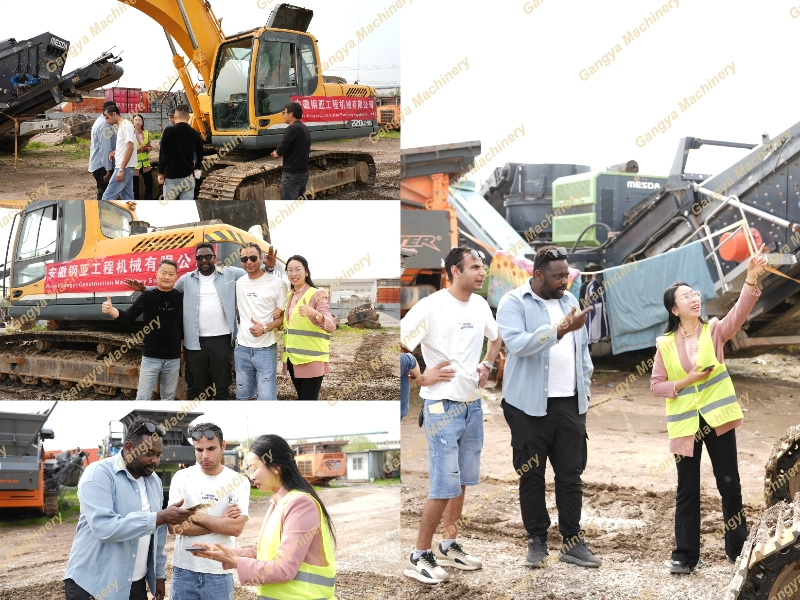
Excavator Size Direction for Quarry Work
| Machine Direction | Typical Role and Upgrade Trigger |
| Around 20 tons | Loose-material loading, smaller crusher feeding, support work, stone sorting and occasional breaker use |
| Around 30 tons | More versatile quarry loading, mixed digging and higher production demand |
| Around 40 tons | Heavier digging, larger loading work and longer breaker applications |
| 50 tons and above | Consider when material, attachment and production demand genuinely require the additional capacity |
| Upgrade trigger | Move to a larger class when the current machine cannot match crusher demand, truck loading or required breaker output |
These are practical directions, not universal tonnage rules. Material, machine configuration, attachment demand and current condition still need to be confirmed.
Can a 20-Ton Excavator Work in a Quarry?
Yes.
Machines such as CAT 320, CAT 323, Komatsu PC220 and Hitachi ZX210 may be suitable for:
- loading loose stone;
- feeding a smaller crushing plant;
- handling separated material;
- repositioning or reducing some larger stones;
- occasional breaker work;
- quarry support work.
A 20-ton machine can still be productive when its assigned role matches its capacity.
The upgrade point comes when production no longer matches the quarry system.
For example:
- the crusher is waiting for material;
- truck loading takes too long;
- harder material reduces cycle speed;
- breaker output cannot meet the production requirement.
At that point, a 30-ton, 40-ton or larger machine may create more value.
Upgrade when the smaller machine cannot support the required workflow—not simply because a larger model is available.
CAT 336, CAT 340 and CAT 349: Different Quarry Roles
In our experience, machines in the 30-ton class often provide a practical balance between production and versatility.
CAT 336 is commonly considered for:
- stone loading;
- bulk material handling;
- general quarry production;
- mixed loading and digging work.
CAT 340 is more often selected for heavier work and breaker applications, although it can also perform loading work.
CAT 349 is usually considered when the project needs another level of:
- digging force;
- machine size;
- stability;
- heavy attachment capacity.
CAT 340 and CAT 349 should not be treated as interchangeable machine classes.
Some work that genuinely requires the capacity of a CAT 349 may remain too demanding for a CAT 340.
🔴 Internal link: CAT 336 vs CAT 340
For Komatsu buyers, we usually prefer PC360 over PC350 when continuous quarry production or heavier-duty work is the main requirement.
🔴 Internal link: Komatsu PC350 vs PC360
These are application directions, not universal model rankings.
The final decision still depends on the material, attachment, output target and condition of the exact machine.
If you are unsure which machine class fits your quarry, start with the material, crusher demand, breaker duty and expected working hours—not with a model number.
Confirm the Breaker With the Exact Machine
CAT 349-class machines are often considered for larger hydraulic breaker applications.
However, the breaker must still be matched using the exact:
- attachment weight;
- hydraulic flow;
- operating pressure;
- return arrangement;
- excavator configuration;
- breaker manufacturer requirements.
Do not assume compatibility only because another excavator of the same model used a similar hammer.
3. Match the Excavator With Trucks and the Crusher
Quarry production is a system.
The excavator does not work alone.
Before buying, confirm:
- crusher feeding demand;
- truck body size;
- number of trucks;
- target loading time;
- truck return cycle;
- material density;
- available loading space.
A larger excavator may load faster, but the quarry only benefits when the trucks and site layout can use that extra capacity.
A large machine with too few trucks may spend time waiting.
A smaller machine feeding a high-capacity crusher may become the production bottleneck.
The buyer should ask:
How much material must move through the complete system—not only through one bucket?
Bucket Size Is Not the Only Productivity Measure
The largest bucket that can be installed is not always the best choice.
Bucket selection also depends on:
- material density;
- rock size;
- penetration;
- machine stability;
- hydraulic load;
- truck size;
- structural load.
A very large bucket may increase machine stress without improving the complete loading cycle.
Use the largest suitable bucket for the material and machine—not simply the largest bucket that can be installed.
4. Check Structure, Undercarriage and Cooling
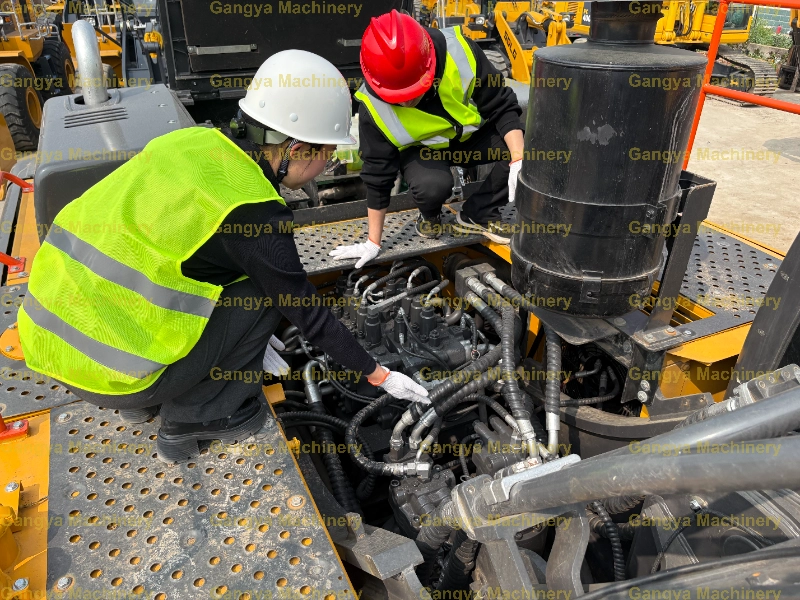
Quarry work places repeated load on areas that may receive less attention in normal earthmoving.
The inspection standard should reflect the planned duty.
Quarry-Specific Inspection Priorities
| Inspection Area | Why It Matters in Quarry Work |
| Engine | Dust exposure and long working hours increase the importance of cold start, blow-by and loaded performance |
| Hot hydraulic performance | A machine may work normally when cold but slow down after reaching operating temperature |
| Boom and stick | Repeated digging and breaker impact may expose cracks, repair areas or excessive stress |
| X-frame and main structure | Stone impact, uneven ground and previous heavy work may cause damage or deformation |
| Undercarriage | Rock, abrasive ground and repeated travel may accelerate wear |
| Cooling system | Dust can restrict airflow and increase engine or hydraulic temperature |
| Pins and bucket linkage | Heavy rock handling may increase clearance and wear |
| Swing system | Loaded rotation can reveal abnormal movement that may not appear in a short unloaded test |
| Previous breaker use | Continuous breaker history requires deeper review of structure, hydraulics and maintenance |
Work Equipment and Structural Repair
Inspect:
- boom root;
- boom and stick weld areas;
- pin bosses;
- bucket linkage;
- bucket ears;
- main frame;
- X-frame;
- guards and lower protection.
Previous structural repair should be judged by:
- repair location;
- original cause;
- repair method;
- reinforcement;
- current condition;
- planned future work.
Remote photos and videos can help identify visible repairs, deformation and areas requiring further review.
However:
Remote photos and videos alone cannot confirm the long-term safety of a structural repair. Any known repaired area should be disclosed clearly and, when the buyer considers the area material to the purchase decision, reviewed by an independent qualified inspector before purchase or shipment.
A repaired area is not necessarily disqualifying, but it should not be treated as low risk without enough evidence.
Poor welding, continuing deformation or an unexplained repair deserves more caution.
A repaired area should never be hidden by paint or treated as irrelevant.
Heavy-Duty and Quarry Configurations
Some excavator models are available with heavy-duty or quarry-oriented equipment.
Possible differences may include:
- reinforced boom or stick;
- heavier bucket construction;
- additional guards;
- different undercarriage components;
- larger counterweight;
- application-specific work equipment.
Do not rely only on sales labels such as:
mining version
quarry version
LC model
Verify the exact:
- model;
- serial number;
- configuration;
- installed components.
An LC designation alone does not prove that a machine has a factory quarry package.
Undercarriage
Rock, uneven ground and repeated heavy loading can increase undercarriage wear.
Inspect:
- track links;
- track shoes;
- rollers;
- idlers;
- sprockets;
- track tension;
- frame damage;
- X-frame condition.
Some quarry machines have rough external appearance because they work around stone every day.
Scratches and dents may be acceptable when they do not affect structure or operation.
Visible frame deformation, cracking or severe uneven wear requires deeper inspection.
Cooling and Dust
Quarries are often dusty.
When air filters, radiators and coolers are not maintained, engine and hydraulic performance may suffer.
Inspect:
- radiator blockage;
- oil-cooler condition;
- fan operation;
- air-filter condition;
- engine temperature;
- hydraulic temperature;
- performance after full warm-up.
A short cold demonstration is not enough for a machine expected to work long shifts.
5. Occasional Breaker Work vs Continuous Breaking
Breaker use should not be treated as one application.
Occasional vs Continuous Breaker Work
| Breaker Duty | Quarry Buying Implication |
| Occasional breaker work | A suitable 20-ton machine may be enough when breaker use is limited and hydraulic compatibility is confirmed |
| Regular mixed breaker work | Increase attention to machine size, boom and stick condition, hydraulic temperature and attachment matching |
| Long-duration breaker work | We normally look more seriously at 40-ton or larger machines, depending on material, hammer size and required output |
| Used machine with breaker piping | Inspect the boom, stick, X-frame, hydraulic system and previous working history more carefully |
| Main warning signs | Structural cracking, abnormal pump noise, high oil temperature, weak hot performance and restricted cooling |
Our preference for 40-ton or larger machines in long-duration breaker applications is an experience-based direction, not a universal minimum.
The required machine class still depends on:
- rock hardness;
- breaker size;
- daily operating hours;
- production demand;
- excavator configuration;
- condition of the exact machine.
Long-term breaker work increases the importance of:
- boom and stick condition;
- pin and bushing wear;
- hydraulic pump noise;
- hydraulic temperature;
- cooling capacity;
- breaker piping;
- frame condition;
- previous maintenance.
For a used machine that already has breaker lines, inspect the boom, stick and X-frame carefully.
The presence of breaker piping does not prove heavy breaker history, but it should trigger more questions.
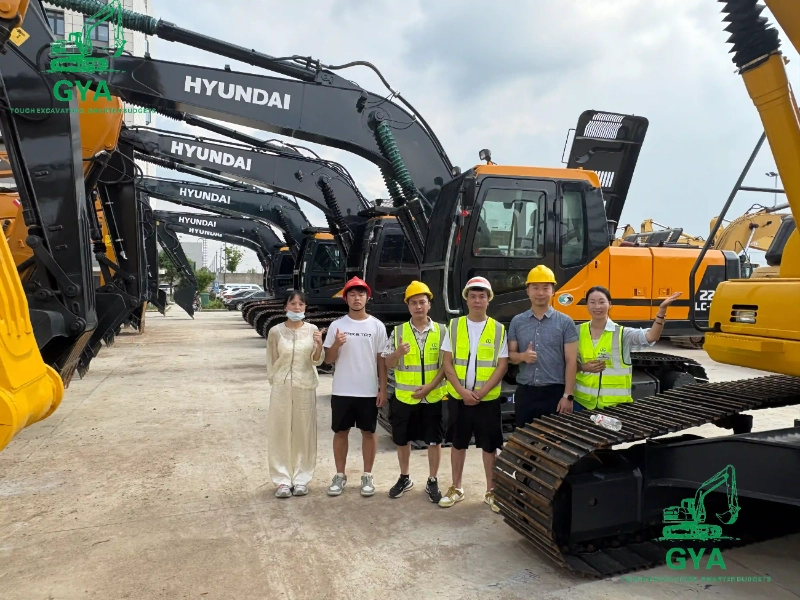
6. Inspect Quarry-Specific Used-Machine Risks
A full used-excavator inspection covers many systems.
This section focuses only on risks that become more important in quarry work.
🔴 Internal link: Used Excavator Pre-Purchase Inspection Checklist
Engine Blow-By and Dust Exposure
The engine remains one of the most important systems.
In dusty quarry conditions, delayed air-filter replacement may increase engine wear risk.
Request:
- a true cold start;
- engine sound;
- smoke observation;
- loaded operation;
- temperature evidence;
- crankcase blow-by inspection.
Excessive crankcase blow-by during a cold inspection is a serious warning sign.
For a large excavator, engine repair can be expensive.
When blow-by is clearly excessive, we normally advise the buyer to be very cautious and often to reject the machine.
In my experience, there is a narrow commercial exception:
If the buyer understands the possible engine-repair cost, accepts the remaining uncertainty and the purchase price fully reflects that risk, the machine may still be evaluated as a repair project.
This should be treated as a planned repair-risk purchase—not as a normal ready-to-work machine.
The risk should be understood before shipment.
Hot Hydraulic Performance
Check:
- pump noise;
- working speed after warm-up;
- combined movements;
- lifting response;
- oil temperature;
- abnormal leakage.
A machine may move normally when cold but slow down after the hydraulic oil reaches operating temperature.
For quarry work, fully warmed evidence is more useful than a short unloaded video.
Pins, Swing and Working Clearances
Our preparation may include correcting excessive pin or swing clearances when needed.
Buyers should still review:
- boom and stick pins;
- bucket pins;
- linkage movement;
- swing play;
- abnormal movement under load.
The important issue is transparency:
What was repaired, why was it repaired and what is the present result?
Quarry Remote Evidence Checklist
| Evidence | What It Helps Verify |
| Cold-start video | Starting condition, smoke, noise and initial engine behavior |
| Fully warmed working video | Hydraulic speed, combined movement and temperature-related weakness |
| Loaded operation | Working response under realistic resistance |
| Boom and stick close-ups | Cracks, repairs, reinforcement and deformation |
| X-frame and undercarriage video | Wear, impact damage and structural condition |
| Pin and linkage close-ups | Excessive clearance and repair status |
| Swing inspection | Abnormal play, noise or movement |
| Radiator and cooler video | Dust blockage, damage and maintenance condition |
| Machine plate and identity | Model and machine identification |
| Known repair disclosure | What has been repaired and what remains uncertain |
When a suspicious structural area cannot be judged clearly by video, the buyer may request:
- surface cleaning;
- additional close-up inspection;
- independent third-party inspection;
- professional crack testing when appropriate.
A simple hammer-tapping video should not be treated as proof that a structure has no internal damage.
7. Same Budget: Bigger Machine or Better Condition?
Additional size only creates value when the quarry can use the extra capacity.
Consider:
A cleaner CAT 336
versus
a CAT 340 with uncertain engine, hydraulic or structural condition
If both machines can complete the required work, we would normally prefer the CAT 336 in better condition.
The reasons may include:
- lower mechanical uncertainty;
- stronger condition reserve;
- lower risk of early downtime;
- easier production planning.
But this principle has a clear limit.
A good CAT 340 does not replace CAT 349 when the work genuinely requires the larger machine’s capacity.
This creates an important rule:
Condition can outweigh one size step when both machines can complete the work. Condition cannot replace a machine class that the job genuinely requires.
8. A Real Myanmar Mining Customer Case
One customer in Myanmar planned to buy a CAT 336 mainly for breaker work.
He told us that his target was approximately 1,000 cubic meters of material per day.
That was the customer’s production target—not a production guarantee from us.
I explained that CAT 336 could perform the work, but it might be relatively small for his breaker requirement and expected output.
After further discussion, he purchased a CAT 340.
Later, the customer told us that CAT 340 worked much more efficiently than his friend’s CAT 336 in their operating conditions.
This does not mean every quarry should choose CAT 340 over CAT 336.
The lesson is:
Select the machine by the real workload and production requirement—not only by the model the buyer first planned to purchase.
9. When One Excavator Is Not the Best System
Some quarries ask one excavator to handle:
- breaking;
- digging;
- loading;
- crusher feeding;
- material sorting.
That may be practical for a smaller operation.
When production grows, separating heavy breaker work from continuous loading may reduce bottlenecks and protect the role of the main production machine.
Possible directions include:
- one excavator for breaker work and another for loading;
- a larger excavator for heavy material and a smaller support machine;
- an excavator for digging and a wheel loader for repeated stockpile loading.
The decision should begin with:
Which task controls production, and which task creates the highest machine load?
🔴 Internal link: How Contractors Should Choose a Used Excavator for Their Jobsite
Quarry Buyer Decision Matrix
| Buying Question | Strong Buying Direction |
| Is the material clearly defined? | Choose by actual material, not only quarry size |
| Is the machine role clear? | Separate loading, feeding, digging and breaker work |
| Can the machine meet the required output? | Match it with crusher and truck demand |
| Is the duty occasional or continuous? | Increase size and condition requirements for long heavy work |
| Is the structure suitable? | Verify repairs, reinforcement, frame and work equipment |
| Is the undercarriage acceptable? | Judge remaining life and current damage |
| Is the cooling system clean and stable? | Require hot-operation evidence |
| Are the hydraulics proven when warm? | Check combined movements, pump noise and temperature |
| Is previous breaker use understood? | Increase inspection depth when history is uncertain |
| Can local parts and service support the machine? | Consider expected repair time, not only parts price |
| Are current records available? | Review what exists and disclose what is missing |
| Can the machine be inspected remotely? | Request clear video, close-ups and third-party inspection when needed |
Final Recommendation
For quarry buyers, the best used excavator is not always the heaviest machine.
Start with:
- material;
- machine role;
- crusher or truck demand;
- daily output target;
- breaker frequency;
- duty cycle;
- acceptable downtime.
Then evaluate:
- engine;
- hydraulics;
- structure;
- undercarriage;
- cooling;
- previous heavy-use history;
- local repair support.
A 20-ton machine can be useful in a quarry when the assigned role is suitable.
A 30-ton machine may offer broader loading and production capability.
A 40-ton or larger excavator may deserve more consideration for continuous breaker work and heavier quarry duty.
But tonnage does not replace condition.
My final rule is:
Choose enough machine for the required quarry output, then choose enough condition reserve to keep that machine working.
Final Quarry Buying Checklist
☐ Material type confirmed
☐ Main machine role defined
☐ Daily or hourly output target discussed
☐ Crusher demand checked
☐ Truck size and loading cycle reviewed
☐ Excavator size matched to the actual work
☐ Bucket or breaker requirements confirmed
☐ Hydraulic flow and pressure checked
☐ Cold-start evidence reviewed
☐ Fully warmed hydraulic test reviewed
☐ Engine blow-by checked
☐ Boom, stick and pin areas inspected
☐ X-frame and undercarriage inspected
☐ Cooling system and radiator condition checked
☐ Previous breaker or quarry history discussed
☐ Known repairs disclosed
☐ Available service records reviewed
☐ Local parts and service support confirmed
☐ Third-party inspection considered
☐ Transport and export plan confirmed
Send Your Quarry Work Requirement
Send us:
- country;
- quarry or mine type;
- material;
- main machine role;
- crusher capacity or production target;
- truck size;
- expected daily working hours;
- breaker model or required breaker size;
- preferred excavator size;
We can discuss:
- suitable machine directions;
- current availability;
- condition evidence;
- attachment requirements;
- machine combinations.
For available machines, we can provide:
- cold-start videos;
- fully warmed working videos;
- boom, stick and repair details;
- pin, swing, radiator and undercarriage close-ups;
- available maintenance information;
- support for customer-arranged SGS or other third-party inspection;
- bilingual purchase contracts;
- assistance with dismantling, local transport, container loading or Ro-Ro arrangements.
We regularly handle quarry-suitable excavators from CAT, Komatsu, Volvo and Hitachi.
Current model availability should be confirmed before purchase.
Send Your Quarry Work Requirement
Related Buying Guides
🔴 Used Excavator Pre-Purchase Inspection Checklist
🔴 How Contractors Should Choose a Used Excavator for Their Jobsite
🔴 CAT 336 vs CAT 340
🔴 Komatsu PC350 vs PC360
Frequently Asked Questions
Can a 20-Ton Excavator Work in a Quarry?
Yes.
It may be suitable for loose-material loading, crusher feeding, support work and occasional breaker use.
The required output and material determine whether a larger machine is needed.
Is CAT 336 Suitable for Quarry Work?
Yes.
CAT 336 is commonly used for loading and general quarry production.
For heavier or longer breaker work, a larger machine may deserve consideration.
Is CAT 340 Better Than CAT 336 for Breaker Work?
CAT 340 may provide more capacity for heavier breaker applications.
The final choice still depends on breaker size, material, production target and machine condition.
Can CAT 340 Replace CAT 349?
Not in every application.
CAT 349 provides another level of machine size, force and heavy-duty capacity.
Some work suited to CAT 349 may remain too demanding for CAT 340.
Should Quarry Buyers Avoid Excavators With Weld Repairs?
Not always.
Review:
- repair location;
- original cause;
- repair procedure;
- reinforcement;
- current structure;
- planned workload.
Remote inspection can identify visible concerns, but a material structural repair may require an independent qualified inspection before purchase or shipment.
Is a Repainted Quarry Excavator a Bad Choice?
Not necessarily.
Appearance should not replace mechanical and structural inspection.
The buyer should understand:
- what was painted;
- what was repaired;
- what current evidence is available.
Are Displayed Working Hours Reliable for Quarry Machines?
Displayed hours are one reference.
Compare them with:
- engine condition;
- hydraulic performance;
- undercarriage wear;
- structure;
- maintenance information;
- current working evidence.
What Video Should an Overseas Quarry Buyer Request?
Request:
- a cold start;
- fully warmed combined movements;
- loaded operation;
- undercarriage details;
- boom and stick details;
- pins;
- swing;
- radiator;
- machine identity;
- known repair areas.
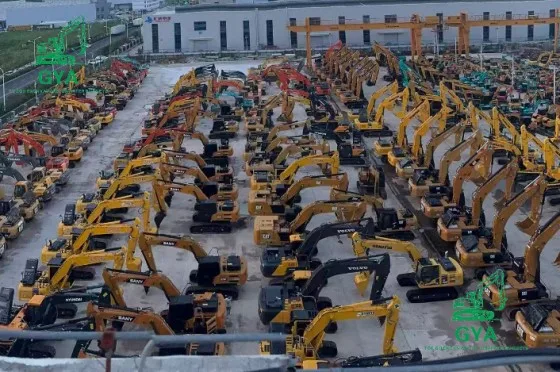
Review Notes
This guide explains quarry-specific selection and used-machine risk principles.
Actual output depends on:
- material;
- operator;
- attachment;
- machine configuration;
- quarry layout;
- trucks;
- crusher demand;
- current condition.
The Myanmar example reflects one customer’s production target, purchase decision and later feedback.
It is not a universal production guarantee.
Current inventory, machine configuration, maintenance records and export requirements should be confirmed for the specific unit before purchase.