


Written and reviewed by KAN, Owner of Anhui Gangya Construction Machinery Sales Co., Ltd.
Experience basis: This guide is based on our experience supplying used excavators to overseas dealers, large brokers, trading companies, rental companies, contractors, quarry buyers and first-time importers.
Last reviewed: July 2026
Many overseas buyers ask:
| Is it really worth importing a used excavator from China instead of buying locally? |
Based on the overseas inquiries, quotations and transactions we handle, China is often one of the most price-competitive sourcing markets for used excavators.
It also offers large inventory, broad model availability, multiple condition levels and stronger capacity for multi-unit sourcing.
Many customers can find excavators locally, but prices may be much higher. In many markets, the China advantage remains meaningful after freight, customs costs, taxes and local delivery.
However, importing is not automatically the best decision for every buyer or every machine.
The correct comparison is not:
| China quotation versus local asking price. |
It is:
| Comparable machine + comparable condition + total landed cost + delivery time + remaining risk + local support. |
Quick Answer
Importing from China may be worth considering when:
- the total landed cost remains competitive;
- China offers a better model, condition or quantity choice;
- local supply is limited or local prices are high;
- available stock and the shipping route fit the project or resale schedule;
- the machine can be verified to an acceptable level;
- local repair and parts support are available.
Local purchase may be better when:
- a suitable machine is available at a similar total cost;
- the project cannot wait for the actual route-specific import timeline;
- direct inspection and immediate delivery are more valuable;
- local warranty or technical support reduces more risk than the remaining import saving.
| Importing is worth considering when the verified price, machine or supply advantages remain meaningful after total landed cost, delivery time, remote-purchase risk and local support are included. |
The Three-Gate Import Worthiness Test
| Decision Gate | What Must Be True |
| Commercial Advantage | China provides a meaningful price, condition, model, quantity or supply advantage after major landed costs are included |
| Delivery Fit | Available stock, inspection, preparation, shipping, customs and inland delivery fit the real project or sales schedule |
| Operating Fit | The machine can be verified to an acceptable level and local repair, parts and maintenance support are available |
When all three gates are reasonably satisfied, importing deserves serious consideration.
If the commercial advantage is weak, local purchase may offer better value.
If delivery fit or operating fit fails, a low China quotation alone is not enough reason to import.
Choosing the wrong channel creates hidden costs.
Importing without a real landed-cost or supply advantage may tie up capital, delay a project or leave a difficult-to-support machine.
Buying locally without comparing China may mean paying more for limited model, quantity or condition choice.
The goal is to identify which option creates the stronger commercial result.
Reading Guide
Go directly to the section that matches your decision:
- Why China Can Offer a Real Sourcing Advantage
- Compare Similar Machines, Not Only Advertised Prices
- Compare Total Landed Cost
- Is Buying Several Machines More Cost-Effective?
- Importing Is Not Always the Slower Option
- Verify the Machine and Confirm Local Support
- When Local Purchase May Be Better
- The Decision Changes by Buyer Type
- Import vs Local Purchase Decision Matrix
- Final Recommendation
1. Why China Can Offer a Real Sourcing Advantage

Price is usually the first reason buyers look at China.
But price is only part of the advantage.
China has a large excavator population and an active used-equipment market.
Buyers may compare:
- different brands;
- different generations;
- different year ranges;
- original-paint and repainted machines;
- different undercarriage conditions;
- different preparation levels;
- single machines and larger quantities.
In some local markets, buyers may find only:
- one or two suitable machines;
- older units;
- limited configurations;
- uncertain condition;
- prices that are difficult to justify.
China may provide more choices within the same model family and budget range.
Supply Depth
Supply depth is the ability to compare enough machines, condition levels, models and quantities instead of choosing from one or two local units.
This is especially valuable for:
- used-equipment dealers;
- large brokers;
- trading companies;
- rental fleets;
- contractors purchasing several machines.
In equipment-scarce markets, importing may not be only a price decision.
It may be the practical way to obtain the required model, quantity and supply capacity.
2. Compare Similar Machines, Not Only Advertised Prices
A lower China quotation does not automatically mean a better purchase.
A higher local quotation does not automatically mean poor value.
Compare:
- model generation;
- year range;
- configuration;
- current condition;
- engine and hydraulic performance;
- undercarriage condition;
- known repairs;
- included attachments;
- preparation scope;
- available evidence.
A local machine may cost more but include:
- immediate inspection;
- faster delivery;
- local transport;
- familiar maintenance;
- practical local support.
A China machine may still offer better value through:
- better current condition;
- a more suitable model;
- clearer evidence;
- greater quantity availability;
- a meaningful cost advantage after arrival.
| The correct comparison is a comparable imported machine versus a comparable local machine—not the lowest advertisement from each market. |
🔴 Internal link: Why Used Excavator Prices Are Different
3. Compare Total Landed Cost
The machine quotation is only the starting point.
A serious comparison may also include:
- China-side preparation;
- inspection;
- loading;
- ocean freight;
- destination charges;
- duties and taxes;
- inland delivery;
- unloading;
- initial maintenance;
- a reasonable repair reserve.
The result changes by:
- country;
- destination port;
- machine size;
- loading method;
- tax system;
- inland distance;
- local machine price.
Import Advantage After Arrival
The real import advantage is what remains after major freight, import, destination, delivery and expected repair costs are included.
In many customer markets, local used-excavator prices remain high enough that the China advantage is still meaningful after these costs are added.
But the result should be checked for the specific machine, condition and destination.
4. Is Buying Several Machines More Cost-Effective?
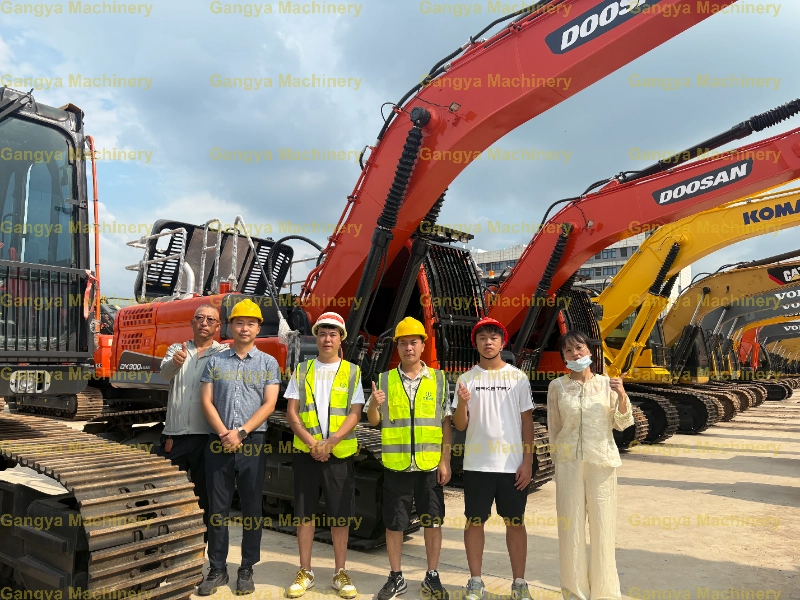
In our experience, buying several machines is usually more cost-efficient than importing one machine separately.
For multi-unit orders, we may have more room to discuss package pricing based on:
- quantity;
- model combination;
- total order value.
Sourcing, inspection, quotation, contracts, loading and shipping can be coordinated together, reducing repeated work.
For dealers and rental companies, a multi-unit purchase may also help build:
- resale inventory;
- a mixed model range;
- rental capacity;
- longer-term supply efficiency.
The exact logistics advantage still depends on:
- machine size;
- quantity;
- loading method;
- route;
It would be incorrect to say that every multi-unit order always has lower freight per machine.
A single machine can still be worth importing when:
- the model is difficult to find locally;
- local prices are very high;
- the machine has a clear condition advantage;
- the buyer needs a specific configuration.
The buyer should still have a clear resale, rental or operating plan.
Buying more machines only to obtain a discount does not automatically create better value.
5. Importing Is Not Always the Slower Option
Some buyers assume:
| Local purchase is fast. Importing is always slow. |
That is not always true.
The actual timeline depends on:
- available stock;
- buyer decision speed;
- inspection requirements;
- preparation work;
- vessel schedules;
- shipping route;
- customs clearance;
- inland delivery.
A Rental Customer From the Philippines
One rental customer from the Philippines needed equipment because a jobsite was about to begin.
Suitable machines were available in China, and the customer was able to confirm the purchase quickly.
We then arranged loading without a long sourcing delay.
| In this specific Philippines case, the estimated port-to-port sea transit at that time was approximately 10–20 days. This figure applied only to that route and shipment context; it excluded machine confirmation, inspection, preparation, customs clearance and inland delivery, and should not be used as a benchmark for other destinations or shipments. |
The customer’s urgent requirement did not automatically make importing unsuitable.
Available stock, fast decision-making and a relatively short route made the timeline workable.
The same urgency may lead to a different decision for a longer route.
Some destinations in Africa may require substantially more shipping time.
| Importing is not automatically slow. Time fit depends on available stock, inspection, preparation, vessel schedule, destination, customs clearance and inland delivery. |
Urgency alone does not decide between import and local purchase.
The real question is whether the complete route-specific timeline fits the required working date.
6. Verify the Machine and Confirm Local Support
Imported machines may be harder to inspect directly, so the decision depends on evidence quality.
Depending on the machine, buyers may request:
- current machine photos;
- cold-start and working videos;
- engine, hydraulic and undercarriage evidence;
- machine identity;
- known repair disclosure;
- live or third-party inspection when required.
Third-party inspection can reduce information risk but cannot remove every used-machine uncertainty. The goal is to reduce uncertainty enough to justify the expected commercial advantage.
Local repair and parts support also matter.
Before choosing a brand or model, ask:
- Is this brand common locally?
- Are technicians familiar with it?
- Are normal maintenance and wear parts available?
- Can larger components be sourced?
- How long may repairs take?
When local support is weak, we normally look first for a brand and model that local technicians already understand.
In some markets without strict emission requirements, customers may prefer mature direct-injection models because local technicians are more familiar with them.
This is not a universal rule.
Local regulations, fuel quality, technical ability and parts availability should guide the decision.
| A cheaper imported machine may not be the better choice when future downtime and parts difficulty outweigh the purchase saving. |
7. When Local Purchase May Be Better
We do not recommend importing only because the advertised machine price is lower.
Local purchase deserves serious consideration when:
- local and imported total costs are close;
- direct inspection has high value;
- immediate delivery is important;
- the project cannot wait for the actual import timeline;
- local warranty has practical value;
- local technical support is much stronger;
- the buyer cannot accept the remaining remote-purchase uncertainty.
When the landed-cost difference is small, I would not recommend importing on price alone.
The imported machine should provide another clear advantage in:
- condition;
- model availability;
- quantity;
- commercial margin.
A slightly higher local price may buy:
- immediate use;
- direct inspection;
- local transport;
- easier communication;
- faster problem resolution.
8. The Decision Changes by Buyer Type
| Buyer Type | Main Import Consideration |
| Used-equipment dealer | Local resale demand, landed margin, inventory turnover, quantity and repeat supply |
| Large broker or intermediary | End-customer requirement, evidence transfer, margin and responsibility boundaries |
| Trading company | Import experience, distribution ability and long-term sourcing |
| Rental company | Fleet utilisation, maintenance team, quantity and delivery time |
| Contractor | Project schedule, production, downtime and local repair support |
| Quarry or mining buyer | Machine role, heavy-duty condition, parts and downtime tolerance |
| First-time end user | Learning readiness, local customs support and maintenance ability |
Used-equipment dealers and trading companies may be well positioned to import because they understand:
- local demand;
- resale pricing;
- machine condition;
- repair;
- inventory turnover.
A first-time end user can also import successfully.
Previous experience is helpful but not always required.
The buyer must be willing to:
- learn;
- verify local import conditions;
- understand the remaining risk;
- prepare local repair support.
Import vs Local Purchase Decision Matrix
| Buying Situation | Stronger Direction |
| Local prices are high and China retains a clear landed-cost advantage | Consider importing |
| Local supply is limited or the required quantity is unavailable | Consider importing |
| China offers better model, condition or configuration choice | Consider importing |
| Several machines are required | Importing may offer stronger pricing and sourcing efficiency |
| Suitable China stock and a short route fit the project schedule | Importing may still work for an urgent requirement |
| Local and imported total costs are very close | Compare direct inspection, speed and support carefully |
| A suitable local machine is ready for immediate work | Local purchase may be more practical |
| The project cannot tolerate the actual import timeline | Consider local purchase or another immediate solution |
| The imported model has weak local parts and repair support | Change model or consider local purchase |
| Machine condition cannot be verified to an acceptable level | Do not rely on price alone |
Final Recommendation
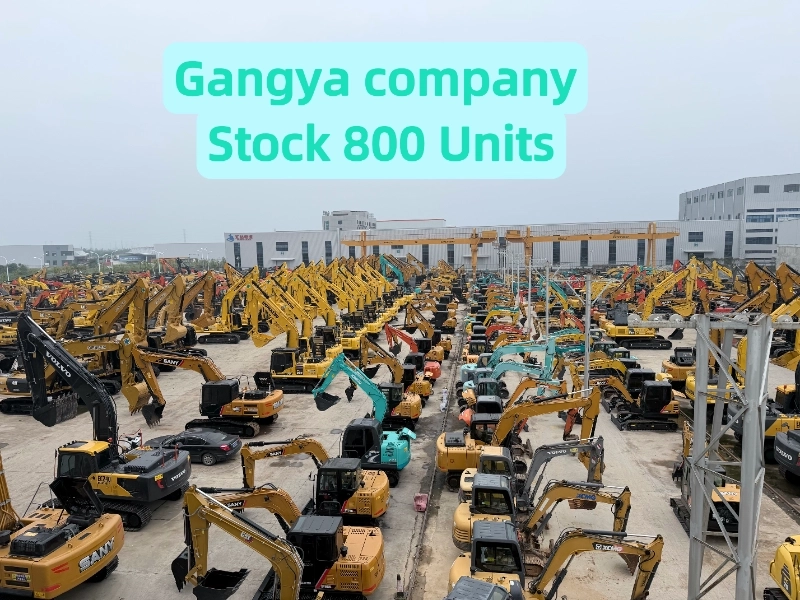
Based on our market experience, China offers real advantages in:
- used-excavator pricing;
- inventory;
- model choice;
- condition choice;
- multi-unit sourcing;
- long-term supply.
For many overseas buyers, these advantages remain meaningful after freight, customs costs, taxes and local delivery are included.
However, the decision should not be based on the China quotation alone.
Compare:
- the actual machine;
- comparable condition;
- total landed cost;
- available quantity;
- delivery time;
- verification quality;
- local repair support;
- the buyer’s commercial purpose.
My practical conclusion is:
| Import from China when the price, machine, quantity or supply advantage remains strong enough after major costs, timing and operating risks are included. Buy locally when speed, direct inspection and local support create more value than the remaining import advantage. |
Ask Whether Importing Fits Your Requirement
| Ask Whether Importing Fits Your Requirement
Send us the information below so we can compare the sourcing direction more realistically. • your country • buyer type • machine use • preferred model or size • quantity • local machine price and condition, if known • approximate budget • possible destination port • required delivery time We can help compare: • China machine availability • model and condition options • possible quotation scope • whether the sourcing advantage appears meaningful Local duties, taxes, customs rules and destination costs should still be confirmed with qualified local professionals. ASK WHETHER IMPORTING FITS YOUR REQUIREMENT |