



Volvo EC290BLC vs EC300DL:
Which Should You Choose?
Written and reviewed by KAN, Owner of Anhui Gangya Construction Machinery Sales Co., Ltd.
Experience basis: This guide is based on our direct experience with Volvo EC290 and Volvo 300 inquiries, machine comparison, used-equipment sales and feedback from dealers, brokers, trading companies and end users.
Last reviewed: July 2026
Volvo EC290BLC and Volvo EC300D or EC300DL are close enough in working class that many buyers compare them directly.
In daily business, many customers simply ask for a “Volvo 300.” In this guide, Volvo 300 refers to the EC300D and EC300DL machines we commonly handle. They belong to the same D-series model family, but the exact suffix, engine, configuration and emission documents should not be assumed to be identical.
Before comparing price, confirm the actual model from the machine plate and current machine information.
Quick Answer
Volvo EC300D and EC300DL are usually the better fit for buyers who want faster response, smoother combined movement, longer ownership and stronger resale appeal in markets that prefer newer Volvo machines. Based on feedback from customers we work with, the Volvo 300 generally feels quicker, stronger and smoother in combined movement when both machines are in similar condition.
However, inquiry levels for EC290 and Volvo 300 are fairly close. With the same budget, I would often choose a better-condition EC290BLC over an average Volvo 300.
EC290 has a relatively simpler electrical layout, but age can bring more wiring faults. Both models need clean fuel and local fuel-system support. For long-term mining, I would compare Volvo EC380 or CAT 336 instead.
Summary Guide
| Choose Volvo EC290BLC When | Choose Volvo EC300D / EC300DL When |
| The same budget buys a better-condition machine | Faster response matters |
| Lower purchase cost is important | The machine will be kept longer |
| Local buyers accept the older model | Future resale matters more |
| Engine, hydraulics and undercarriage are clearly better | The market prefers newer Volvo machines |
| A later emission version is not required | The buyer has checked the exact version and documents against local requirements |
This is not a fixed rule. Machine condition, local repair support and local resale demand can change the final choice.
Reading Guide
- What Is the Real Difference Between Volvo EC290BLC and EC300DL?
- Which Model Fits B2B Buyers Better?
- Same Budget: Better EC290 or Average Volvo 300?
- When Is Volvo 300 Worth the Extra Money?
- Repair, Electrical Systems and Fuel Quality
- What Should Buyers Inspect Before Payment?
- When Should You Consider EC380 or CAT 336 Instead?
1. What Is the Real Difference Between Volvo EC290BLC and EC300DL?
Which Should You Choose?
The choice is not simply “old model or new model.”
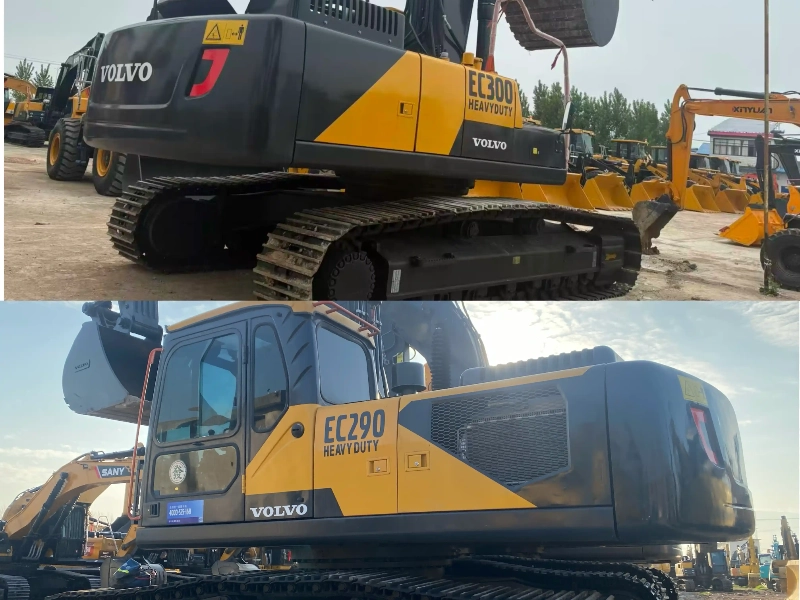
EC290BLC belongs to an earlier Volvo generation. EC300D and EC300DL are later Volvo 300 models with updated engine output, hydraulic control and operator information.
| Volvo EC290BLC | Volvo EC300D / EC300DL |
| Earlier Volvo generation | Later Volvo D-series generation |
| Usually lower purchase cost | Usually needs a higher budget |
| Relatively simpler electrical layout | Later control and monitoring system |
| Older age may increase preparation work | Later generation may resell better where buyers prefer newer Volvo machines |
| Good value when condition is strong | Usually quicker when condition is similar |
In our business, inquiry levels for EC290 and Volvo 300 are relatively close.
The newer Volvo 300 attracts buyers who want a later model, but many B2B customers still compare purchase cost, actual condition and local resale demand before choosing.
The biggest difference customers mention is the working feel.
When both machines are in similar condition, customer feedback is fairly consistent:
- the response feels faster;
- combined movements feel smoother;
- the machine feels stronger during normal work.
I would not turn that into an absolute rule.
A worn Volvo 300 can still work worse than a good EC290. The model name tells us the generation, but the hot test shows what the used machine can still do.
I would not give one fixed fuel answer for these two models.
I would not tell a customer that EC300 always uses less fuel or that EC290 always uses more. Fuel consumption changes with the project, material, operator, hydraulic condition and working load.
Loading loose soil, digging hard ground and quarry work are not the same job.
After deciding which direction fits your market, review the Volvo EC290B / EC290BLC options and Volvo EC300D / EC300DL options separately.
2. Which Model Fits B2B Buyers Better?
Our main customers for these machines are used-equipment dealers, brokers and trading companies.
We also work with rental companies, contractors and quarry buyers, but they do not all make the decision in the same way.
| Buyer Type | What Usually Matters Most |
| Used-equipment dealer | Purchase cost, local resale price and stock turnover |
| Broker or intermediary | The final customer’s model, budget and market |
| Trading company | Correct model identity, clear condition and preparation scope |
| Rental company | Long-term performance, downtime and future resale |
| Contractor or quarry buyer | Jobsite output, reliability and repair support |
For dealers, the question is practical:
| After preparation, shipping and local resale, is there still enough margin left? |
A good-condition EC290 may leave more room when local buyers accept the older model.
A good Volvo 300 may be easier to position in a market where customers prefer newer machines and are willing to pay more for them.
Brokers and trading companies should follow the final buyer’s real requirement.
Do not move a customer from EC290 to Volvo 300 only because the supplier has more Volvo 300 machines available.
Do not push EC290 only because it is cheaper.
For rental companies and long-term owners, the newer Volvo 300 can make more sense when faster response, longer ownership and future resale are important.
I would only pay the Volvo 300 premium after the hot test, travel and undercarriage support it.
For contractors and quarry buyers, hot hydraulic performance, structure, undercarriage condition and real job intensity matter more than resale image alone.
3. Same Budget: Better EC290 or Average Volvo 300?
Which Should You Choose?
With the same budget, I usually prefer the better-condition machine.
A buyer may be comparing:
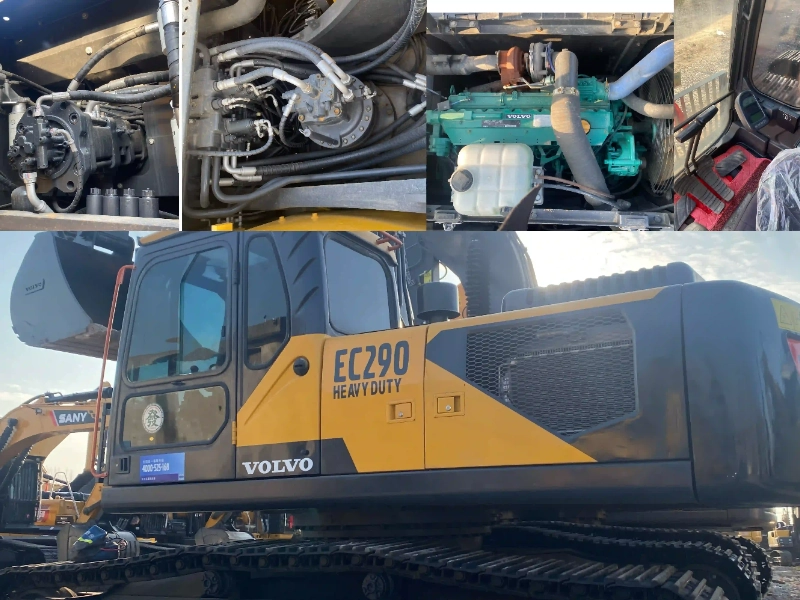
| an EC290BLC with stronger hot hydraulics, a better undercarriage and less immediate repair work |
against:
| an average EC300D or EC300DL that already needs more preparation. |
In that case, I would normally choose the EC290.
The buyer is purchasing a used excavator, not only a newer model name.
A lower-generation machine with better engine condition, stronger hydraulics and more undercarriage life may cost less to prepare and create less risk after arrival.
| For the same budget, a better-condition Volvo EC290BLC can be a stronger purchase than an average EC300D or EC300DL because hot hydraulic response, undercarriage life and immediate preparation cost may matter more than the newer model name. Volvo 300 makes more sense when the buyer wants faster response, plans longer ownership, values future resale, or has confirmed that the exact version and documents fit local emission and import requirements. |
There are also cases where I would choose Volvo 300:
- local customers strongly prefer newer models;
- the machine will be kept for several years;
- future resale value matters;
- local Volvo diagnosis and repair support is good;
- the Volvo 300 is clearly in better condition;
- the buyer has confirmed the exact version and documents against local requirements.
A dealer may choose the better-condition EC290 for margin, while a long-term owner may pay more for a good Volvo 300.
4. When Is Volvo 300 Worth the Extra Money?
Which Should You Choose?
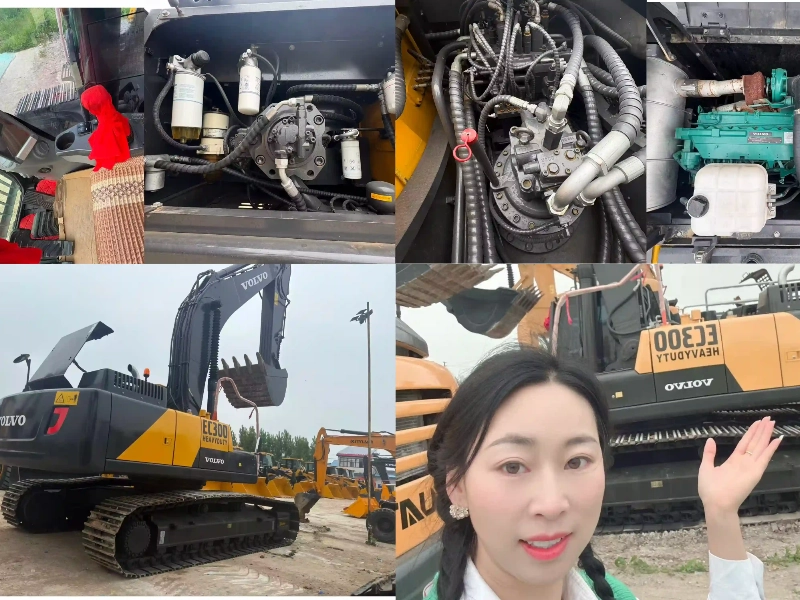
A Volvo 300 normally needs a higher budget.
That extra money should buy something useful. It should not be paid only for a newer badge.
| The Extra Cost May Make Sense | The Extra Cost May Not Make Sense |
| The machine will work on a long-term project | The buyer only wants a newer model name |
| Faster response improves daily work | Hot hydraulic performance is only average |
| Future resale value matters | Local buyers will not pay more |
| The market prefers newer Volvo machines | Local diagnosis and repair support are weak |
| The exact version and documents have been checked against local requirements | The EC290 is clearly in better condition |
For customers running long-term projects, I am more willing to recommend Volvo 300.
The quicker response and smoother combined movement can matter when the machine works many hours over several years.
In markets where buyers pay more for newer Volvo machines, a good-condition EC300 can also be easier to resell later.
But the machine has to earn that higher price.
I would not pay a large premium for a Volvo 300 if:
- the hydraulics weaken after warm-up;
- the machine has unresolved monitor warnings;
- the travel is weak;
- the undercarriage is already tired;
- the local market will not pay more for the newer generation.
Where emission rules apply, a newer Volvo 300 may be worth checking first.
However, compliance must be judged from the exact machine version and documents, not from the “Volvo 300” model name alone. Buyers should also confirm local import requirements independently.
5. Repair, Electrical Systems and Fuel Quality
Some buyers simplify the comparison too much:
| EC290 is older, so it must be easier to repair. |
That is not always true.
| Volvo EC290BLC | Volvo EC300D / EC300DL |
| Relatively simpler electrical layout | Later control and monitoring generation |
| Older age may bring more wiring faults | Monitor, sensors and wiring still need checking |
| Old repairs and connectors deserve attention | Newer electronics are not automatically trouble-free |
| Clean fuel is important | Clean fuel is also important |
| Check local fuel-system and basic diagnostic support | Check local electronic diagnosis and fuel-system support |
The EC290 electrical layout is relatively simpler.
However, most EC290 machines are older.
Because of age, we may see more problems around:
- wiring;
- plugs;
- connectors;
- insulation;
- old electrical repairs.
So I would not automatically call EC290 the safer electrical choice.
The design may be simpler, but age creates its own problems.
EC300D and EC300DL use a later control generation.
Buyers should check:
- current monitor information;
- warning messages;
- sensor response;
- visible wiring repairs;
- communication faults;
- previous electronic repair work.
| In our experience, Volvo EC290BLC has a relatively simpler electrical layout, but older age can also bring more wiring, connector and electrical faults. EC300D and EC300DL use a later control generation, but newer electronics are not automatically trouble-free. Buyers should compare local diagnostic ability, parts support, fuel quality and the condition of the actual machine instead of judging repair risk by age or generation alone. |
Fuel quality matters on both models.
Poor diesel can increase the risk of injection-system problems.
Before buying, ask:
- Can local technicians repair Volvo fuel systems?
- Are common fuel-system parts available?
- Is local diesel quality stable?
- Can better filtration and regular fuel maintenance be arranged?
I would not choose either model on the assumption that it can tolerate poor-quality fuel.
Both models need reasonably clean diesel, proper filtration and regular fuel-system maintenance.
If local fuel quality is unstable, confirm local injection-system support and consider better fuel filtration and stricter fuel maintenance before buying either model.
6. What Should Buyers Inspect Before Payment?
The core inspection is almost the same for both models.
For EC290BLC and Volvo 300, confirm cold start, engine behavior, fully warmed hydraulics, combined movement, travel, swing, undercarriage, monitor warnings and machine identity.
Give extra attention to the following points.
| EC290BLC: Extra Attention | EC300D / EC300DL: Extra Attention |
| Older wiring and connectors | Exact D or DL identity |
| Previous electrical repairs | Monitor and sensor warnings |
| Leakage and cooling | Visible wiring or control repairs |
| Remaining undercarriage life | Hot combined movement |
| Older-machine preparation needs | Emission documents when required |
For EC290BLC, several small age-related problems can add up.
Old wiring repairs, oil leaks and worn undercarriage parts may not look serious separately, but together they can change the real preparation cost.
For EC300D and EC300DL, the expected Volvo 300 advantage should still be visible after the machine is fully warm.
A newer display and cleaner paint do not prove stronger hydraulics.
Before payment, request current machine and engine plates, a cold-start video, a fully warmed working video, travel footage, monitor information and undercarriage close-ups from the same machine.
Use the complete used-excavator inspection guide for the full checking process.
7. When Should You Consider EC380 or CAT 336 Instead?
EC290BLC and Volvo 300 can fit:
- general earthmoving;
- truck loading;
- long-term construction projects;
- rental work;
- some quarry work.
Long-term mining is a different decision.
If the machine will work continuously in mining, heavy loading or high-production conditions, I would normally compare:
- Volvo EC380
- CAT 336
before making the final choice.
These machines may provide more working reserve for continuous heavy use.
That does not mean bigger is always better.
A larger excavator also brings:
- higher purchase cost;
- higher fuel use;
- more transport pressure;
- higher undercarriage cost;
- more expensive repairs.
The project needs to justify the larger machine.
For normal construction, rental and general loading work, a good EC290 or Volvo 300 may still be the more practical purchase.
Final Buying Checklist
Market and Model
☐ Exact model and suffix confirmed
☐ Local resale demand reviewed
☐ Exact version and documents checked against local emission and import requirements
Machine Condition
☐ Cold start checked
☐ Fully warmed hydraulic response checked
☐ Combined movement checked
☐ Travel and undercarriage checked
☐ Monitor warnings reviewed
Ownership and Resale
☐ Local Volvo repair and diagnostic support confirmed
☐ Fuel quality and filtration considered
☐ Resale or jobsite plan discussed
☐ Preparation and repair cost included in the budget
| Compare EC290BLC and Volvo 300 Options
Tell us your destination market, buyer type, resale or jobsite plan, budget, preferred model and local Volvo repair support. We can compare available EC290BLC, EC300D and EC300DL machines by exact model identity, current working evidence, preparation needs and price. COMPARE VOLVO 290 AND 300 OPTIONS |
Current Volvo Options
- Volvo EC290B / EC290BLC Excavator Options
- Volvo EC300D / EC300DL Excavator Options
Related Buying Guides
- Used Excavator Pre-Purchase Inspection Checklist
- What Videos Should You Request Before Buying a Used Excavator?
- Why Two Used Excavators With the Same Model Can Have Different Prices
Frequently Asked Questions
Is EC300D the Same as EC300DL?
They belong to the same Volvo 300 D-series model family, but the suffix and exact configuration should not be assumed to be identical.
In daily business, many buyers simply call both models “Volvo 300.”
Before payment, confirm the exact model, engine and configuration from the machine plate and current machine information.
Is EC290 Easier to Repair Than EC300?
Not automatically.
EC290 has a relatively simpler electrical layout, but its older age may bring more wiring, connector and electrical faults.
Repair difficulty also depends on local technician experience, diagnostic ability, parts availability, fuel-system support and the condition of the actual machine.
Does Volvo 300 Use Less Fuel Than EC290?
There is no fixed answer.
Fuel use depends on project type, material, operator, engine condition, hydraulic condition and working load.
Do not compare fuel consumption only by model name.
What Should I Confirm Before Paying?
Confirm the exact model, machine plate, engine plate, cold start, fully warmed hydraulics, combined movement, travel, undercarriage, monitor information and known repair work.
The photos, videos and quotation should all refer to the same machine.
Sources and Review Notes
This guide combines Volvo model literature with our direct used-equipment inquiry, sales, machine-comparison and customer-feedback experience.
Exact model suffix, engine, emission version and configuration must be confirmed from the specific machine, identification plates and relevant documents before purchase.