


Written and reviewed by KAN, Owner of Anhui Gangya Construction Machinery Sales Co., Ltd.
Experience basis: This guide is based on our own equipment operation, jobsite experience and communication with overseas used-equipment dealers, brokers, trading companies, contractors and end users.
Last reviewed: July 2026
Hitachi and Komatsu are two of the most recognized Japanese excavator brands in the international used-equipment market.
Buyers often ask:
| Is Hitachi better than Komatsu? |
My answer is:
| There is no global winner. The better brand is the one that fits the buyer’s local market, job, repair system, resale demand and actual machine condition. |
In our business, Hitachi and Komatsu receive broadly similar inquiry levels. However, buyers who come to us with a clear preference for Hitachi often make decisions more firmly and, in our experience, are more likely to complete a purchase.
Many of these customers are used-equipment dealers, brokers, intermediaries and trading companies.
This is an observation from our own customer base, not a universal global sales ranking.
Quick Answer
Choose Hitachi first when:
- local buyers strongly recognize Hitachi;
- fuel economy is an important operating concern;
- local technicians understand the required model;
- parts and resale demand are established;
- the buyer already operates a Hitachi fleet;
- a better-condition Hitachi is available within the budget.
Choose Komatsu first when:
- Komatsu has stronger local market acceptance;
- local technicians and parts suppliers support the model well;
- the buyer values a slightly stronger digging character;
- the existing fleet already uses Komatsu;
- local resale and inventory turnover are stronger;
- a better-condition Komatsu is available within the budget.
If both brands fit the work and local market:
| Choose the better-condition machine. |
The Four-Step Hitachi vs Komatsu Brand Decision
| Decision Step | What the Buyer Should Confirm |
| 1. Market Fit | Which brand do local buyers recognize, local technicians repair and the local market resell more easily? |
| 2. Job Fit | What work, production, fuel-consumption and digging requirements must the machine meet? |
| 3. Model Fit | Which exact model and generation are being compared? |
| 4. Condition Fit | Which actual machine has the better engine condition, hydraulic performance, undercarriage and structural condition? |
I normally check market fit first, job fit second, the exact model and generation third, and current machine condition before making the final recommendation.
A wrong brand direction can slow a dealer’s inventory turnover, increase a contractor’s repair difficulty, complicate a rental fleet or lead a buyer to accept a weaker machine only for the logo.
Reading Guide
- Why Buyers Compare Hitachi and Komatsu
- Real Market Observation: Brand Preference Is Local
- Fuel Economy, Digging Character and Job Fit
- Parts, Repair, Resale and Fleet Compatibility
- Brand Choice by Buyer Type
- Exact Model, Generation and Machine Condition
- Move From Brand Preference to Available Machines
- Final Recommendation
1. Why Buyers Compare Hitachi and Komatsu
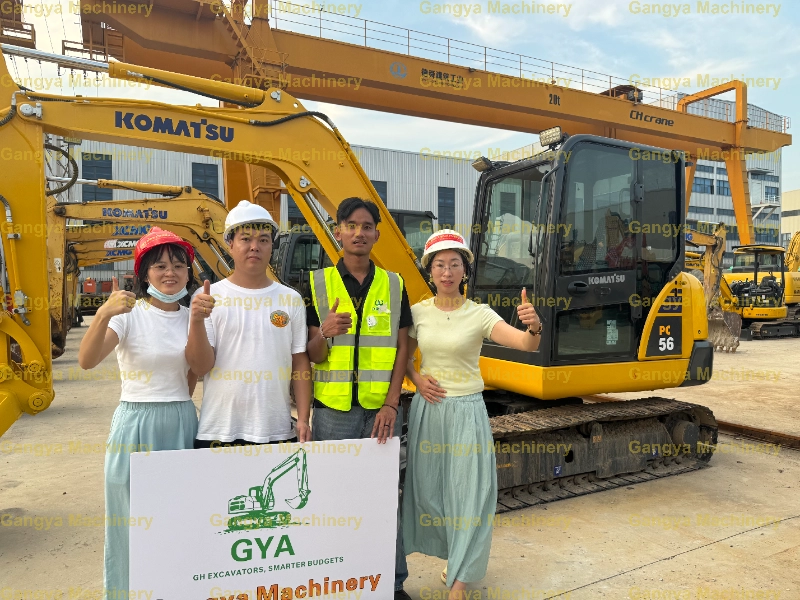
In many overseas markets, buyers already know Hitachi ZX excavators and Komatsu PC excavators.
Both brands have established model recognition, repair experience, parts channels and resale demand. This makes them natural competitors in the used market.
However, brand comparison often becomes too simple:
| Hitachi is smooth and fuel-efficient. |
| Komatsu is strong and durable. |
Those descriptions may reflect part of the market experience, but they are not enough for a used-equipment purchase.
A buyer is purchasing one exact machine for one market, one job and one commercial purpose.
| A brand comparison can narrow the shortlist, but the final purchase still needs to move to the exact model and generation. |
2. Real Market Observation: Brand Preference Is Local
Brand loyalty in the used-equipment market is often local rather than global.
A brand may become strongly accepted because local contractors have used it for many years, technicians understand the machines, parts are available, dealers know its resale value and buyers recognize specific models.
Our Observation From Iraqi Buyers
Among the Iraqi buyers we have communicated with, Hitachi recognition is especially strong.
We receive interest in models such as:
- Hitachi ZX200;
- Hitachi ZX210;
- Hitachi ZX350.
Among these buyers, -5G models have received more attention in the inquiries we have handled, while some customers also ask for -3 series machines.
This reflects our own customer and inquiry experience rather than a fixed rule for the entire Iraqi market.
Some customers ask specifically for Hitachi and may not accept a Komatsu alternative, even when the Komatsu machine can also perform the work.
This does not mean every Iraqi buyer chooses Hitachi, and it does not mean Komatsu is an inferior brand.
The preference reflects local brand recognition, model familiarity, parts supply, technician experience and resale habits.
Myanmar Market Feedback
Based on the market feedback and customer discussions available to us, Hitachi also appears to have strong recognition in Myanmar.
However, Komatsu has an established customer base there as well, so Myanmar should not be treated as a one-brand market.
| Country preference is a useful market signal, not a rule for every buyer. |
3. Fuel Economy, Digging Character and Job Fit
Based on my own experience, Hitachi’s fuel-efficiency advantage is noticeable.
This opinion does not come only from brochures or online comparisons.
We have our own equipment working on jobsites, and I have direct experience with machine operation and fuel use. Customers have also given us similar feedback.
| This is an operating observation from our own machines and customer feedback, not a controlled laboratory fuel-consumption test. |
I would not apply one fixed fuel-saving percentage to every comparison because actual consumption changes with the model, generation, machine condition, work mode, material, operator and maintenance.
For digging power, Komatsu may feel slightly stronger in some comparable applications.
But Hitachi is not a weak machine.
A suitable Hitachi model in good condition can still provide strong digging and production performance.
It is too simple to say:
| Hitachi is only for light work. |
Or:
| Komatsu is the only choice for heavy work. |
Both brands offer machines for general earthmoving and heavier applications.
The job should define the required machine class first.
Before comparing the brands, confirm the material, production target, required attachments, work cycle and acceptable downtime.
4. Parts, Repair, Resale and Fleet Compatibility
Parts and repair costs are local questions, not universal brand conclusions.
In one market, Komatsu may have more technicians, PC-series parts may circulate more widely and customer acceptance may be stronger.
In another market, Hitachi may have stronger recognition, ZX-series machines may be easier to repair and resale may be faster.
Before recommending a brand, I normally ask:
- Which models are common locally?
- Which brand do technicians understand?
- Where can the buyer obtain maintenance, engine and hydraulic parts?
- Which models are easier to resell?
- How long could major repairs keep the machine out of service?
A globally famous brand can still be a poor local choice when support is weak.
Fleet compatibility also matters.
Continuing with an existing Hitachi or Komatsu fleet may reduce parts variety, technician training, operator adaptation and diagnostic complexity.
A mixed fleet is not automatically wrong, but the buyer should understand the extra management requirements.
5. Brand Choice by Buyer Type
| Buyer Type | Main Brand Decision |
| Used-equipment dealer | Local demand, resale speed, landed margin, inventory turnover and repeat supply |
| Large broker or intermediary | End-customer brand requirement, model accuracy, evidence transfer, margin and responsibility boundaries |
| Trading company | Local distribution demand, model acceptance and long-term sourcing |
| Rental company | Fleet compatibility, maintenance standardization, downtime and resale |
| Contractor | Job fit, production, fuel cost, local repair and machine condition |
| End user | Ease of operation, support, budget and long-term ownership |
For dealers, the better commercial choice is usually the brand that local customers accept and inventory can turn over more quickly.
Brokers often know whether the end customer will accept an alternative brand.
I normally respect a fixed brand requirement when it is supported by local resale demand, parts supply, technician familiarity, an existing fleet or a confirmed end-customer requirement.
I ask the buyer to compare again when the preference is based only on general reputation and requires accepting a clearly weaker machine.
Contractors should start with the job, not the logo.
Rental companies should also consider whether changing brands adds parts, training and maintenance complexity without creating enough operating value.
6. Exact Model, Generation and Machine Condition
A brand-level article cannot replace a specific model comparison.
Different generations may change engine systems, fuel requirements, electronic systems, maintenance expectations, local repair difficulty and buyer acceptance.
A Hitachi buyer may still need to compare:
| ZX200 or ZX210? |
Or:
| -3 series or -5G? |
A Komatsu buyer may still need to compare:
| PC200 or PC220? |
Or:
| -7 or -8 generation? |
Brand preference is the beginning of the decision, not the final answer.
Same Budget: Choose the Better-Condition Machine
Budget should not be separated from the actual work.
I first check:
- Can both machines perform the required job?
- Are both brands accepted locally?
- Can local technicians support both models?
- What is the condition of each actual machine?
When both brands fit the work and local support is available, I normally prefer the better-condition machine.
A good-condition Hitachi can be a better purchase than a weaker-condition Komatsu. The same applies in the other direction.
| Brand recognition can support resale, but it cannot repair engine wear, weak hydraulics, a poor undercarriage or structural damage. |
I do not advise paying for a preferred logo while accepting a clearly weaker machine.
Current condition should still be checked through cold start, engine performance, hydraulic operation, travel and swing, undercarriage, structure, machine identity and repair disclosure.
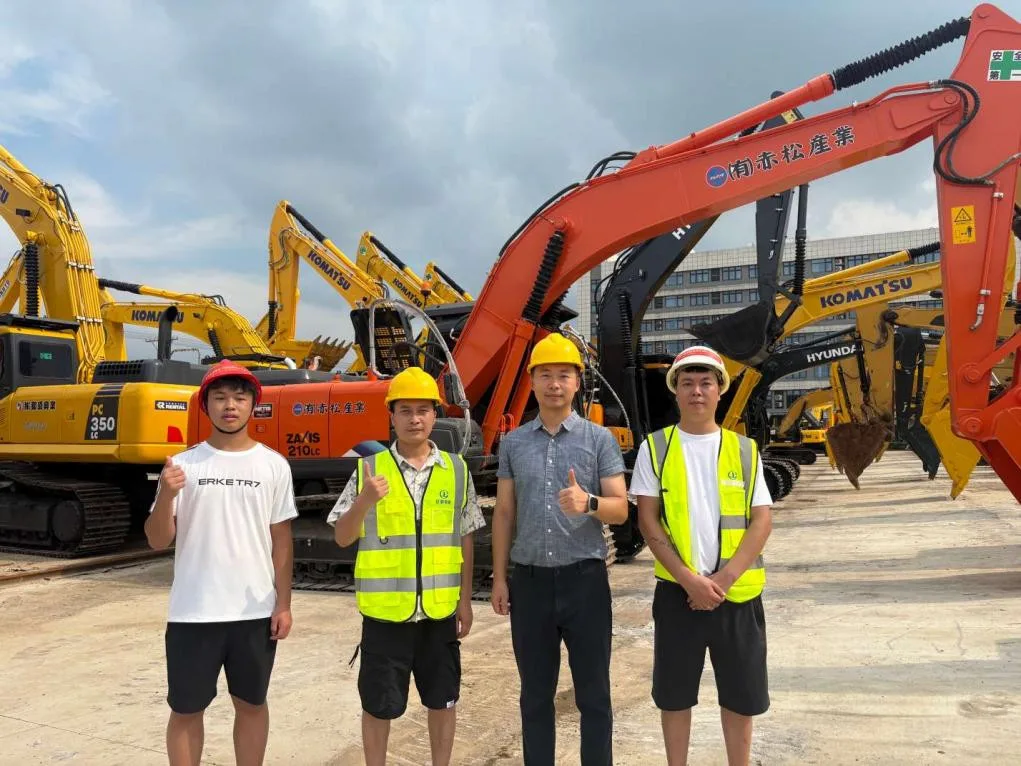
When Not to Prioritize Hitachi or Komatsu
Do not prioritize Hitachi only because you like the brand when local technicians do not understand the model, important parts are difficult to obtain, local resale demand is weak, the existing fleet is Komatsu or the required Komatsu model fits the work more clearly.
Do not prioritize Komatsu only because of its heavy-duty reputation when the local market strongly prefers Hitachi, Hitachi resale is faster, the existing fleet is Hitachi, local Komatsu support is weak or fuel economy creates more long-term value for the work.
| Reconsider either brand when keeping the preferred logo requires accepting a clearly weaker machine within the same budget. |
Neither brand should be selected only because of a slogan.
The decision should connect:
| Market fit + job fit + model fit + condition fit. |
7. Move From Brand Preference to Available Machines
After choosing a brand direction, compare the exact model and generation.
A general-earthmoving buyer may compare Hitachi ZX200 or ZX210 options with Komatsu PC200 or PC220 options.
For heavier applications, the shortlist may move toward models such as the Hitachi ZX350 and Komatsu PC350 or PC360.
The correct comparison depends on machine size, work, local support, budget and current condition.
Final Recommendation
Hitachi and Komatsu are both important brands in the international used-excavator market, but the better choice changes with the buyer’s market, work and available machine condition.
| Choose Hitachi when its fuel economy, local recognition, fleet compatibility or available machine condition creates more value. |
| Choose Komatsu when its local support, fleet compatibility, digging character or available machine condition creates more value. |
| When both brands fit the market and the work, choose the better-condition machine. |
Ask Us to Compare Hitachi and Komatsu Options
| Ask Us to Compare Hitachi and Komatsu Options
Send us: • your country • buyer type • machine use • preferred tonnage • which brand your local customers already prefer • preferred model and generation • quantity • budget • local parts and repair situation We can help compare: • currently available Hitachi and Komatsu options • suitable model families and generations • current condition levels • which brand better fits your market and operating requirements The final decision should still be based on the actual machine, current evidence and local operating environment. ASK US TO COMPARE HITACHI AND KOMATSU OPTIONS |
Frequently Asked Questions
Is Hitachi Better Than Komatsu?
There is no global winner. Hitachi may be more attractive where fuel economy and local brand recognition matter. Komatsu may be more attractive where local support, fleet familiarity or a slightly stronger digging character creates more value.
Is Hitachi More Fuel-Efficient Than Komatsu?
Based on our own jobsite experience and customer feedback, Hitachi often shows a noticeable fuel-efficiency advantage. Actual fuel use still depends on model, generation, condition, work mode, material, operator and maintenance. We do not apply one fixed percentage to every comparison.
Is Komatsu Stronger Than Hitachi?
Komatsu may feel slightly stronger in some comparable applications. However, Hitachi is not a weak machine. The work, exact model, configuration and current condition should decide whether the machine is suitable.
Which Is Cheaper: Hitachi or Komatsu?
There is no universally cheaper brand in the used market. Price changes by model, generation, year, condition, local demand and available supply. Compare machines that can perform the same work and have a similar condition level.
Which Is More Reliable: Hitachi or Komatsu?
I would not rank Hitachi or Komatsu as universally more reliable in the used market. Reliability depends heavily on the exact generation, maintenance history, engine condition, hydraulics, undercarriage and previous repairs.
Which Brand Has Better Resale Value?
Resale value depends heavily on the local market. Hitachi may resell faster where buyers strongly recognize ZX models. Komatsu may have stronger resale where PC models, parts and technician support are more established.
Should I Choose Brand or Machine Condition First?
First confirm that the brand and model fit the work and local support environment. If both are suitable, choose the better-condition machine rather than accepting serious mechanical or structural risk for a preferred brand.
| Experience note: These recommendations are based on our own equipment operation, export sales experience and customer feedback. Actual fuel use, repair support, resale demand and machine performance vary by model, generation, condition, market and application. |